
Construction projects in Texas face real financial risks from weather, theft, and accidents. Builders risk insurance Texas protects your investment in materials, equipment, and structures while work is underway.
At Stonebrook Insurance, we help contractors and builders understand exactly what this coverage does and doesn’t protect. The right policy can save you thousands when unexpected events threaten your project timeline and budget.
What Builders Risk Insurance Actually Covers
Protection for Your Project Investment
Builders risk insurance protects your construction project from financial losses when materials, equipment, and structures suffer damage or destruction before the project completes. This coverage applies to the building itself while it’s under construction, temporary structures like scaffolding and storage sheds, building materials stacked on-site awaiting installation, and equipment brought to the job. The policy typically covers damage from weather events, theft, vandalism, and accidents. Texas contractors face significant exposure to construction theft, making this protection financially sensible rather than optional.
How Builders Risk Differs from General Liability
General liability insurance, which most contractors already carry, protects against injuries or property damage your work causes to other people. Builders risk insurance flips this focus entirely-it protects your own project investment. General liability covers a subcontractor who accidentally damages a neighboring property or a worker who gets injured. Builders risk covers materials stolen from your site or wind damage to the structure you’re building.
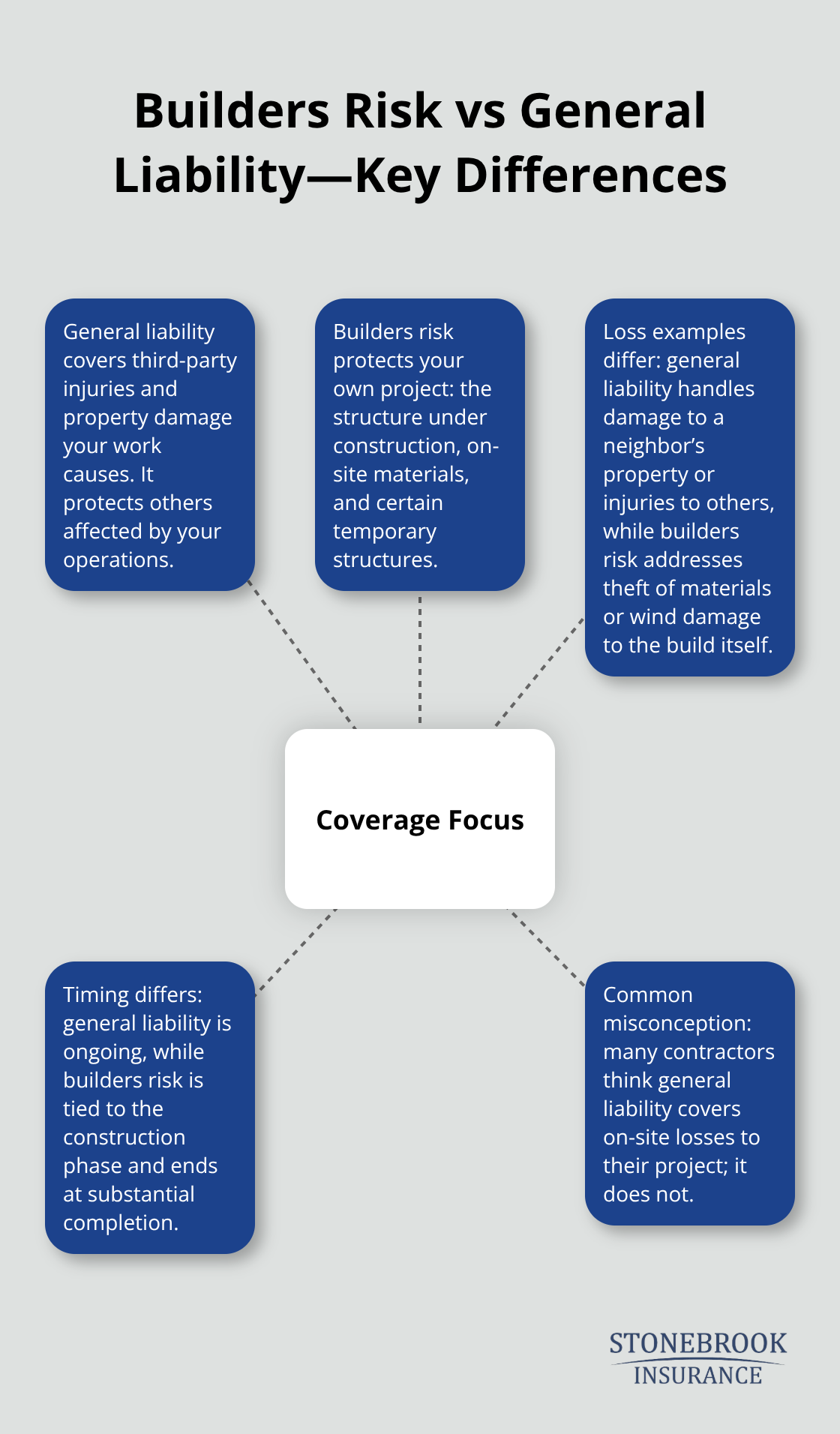
Many contractors mistakenly believe their general liability policy handles on-site losses, then face thousands in unexpected costs when something goes wrong. These are fundamentally different protections addressing separate risks.
Texas Weather and Construction Exposure
Construction projects in Texas face weather exposure that makes this coverage particularly relevant. The state experiences severe hail, high winds, and occasional hurricanes that damage materials and partially completed structures. Projects lasting six months to two years remain vulnerable during the entire construction window, and that exposure period justifies dedicated protection. A typical residential construction project in Texas carries materials and work-in-progress valued between $150,000 and $500,000 depending on scope. Losing even 10 percent of that value to theft or weather damage creates serious financial consequences that builders risk insurance prevents.
Finding the Right Coverage for Your Needs
The specific protection you need depends on your project type, timeline, and materials on-site. Residential projects, commercial developments, and renovation work each present different risk profiles that affect policy selection. Understanding what your project actually requires (rather than purchasing generic coverage) helps you avoid paying for unnecessary protection while maintaining adequate safeguards. Your next step involves assessing your specific project scope and comparing how different policies address those particular risks.
What Your Builders Risk Policy Actually Covers
Builders risk insurance in Texas protects specific assets during construction, but the coverage boundaries matter more than contractors typically realize. Materials staged on your job site receive protection from weather, theft, and vandalism while awaiting installation. Equipment you bring to the project, including tools, machinery, and temporary installations like scaffolding, falls under this umbrella. The structure itself during construction receives coverage against damage from environmental hazards and accidents. However, coverage stops once you substantially complete the work, which means timing your policy renewal matters significantly.
When Coverage Starts and Stops
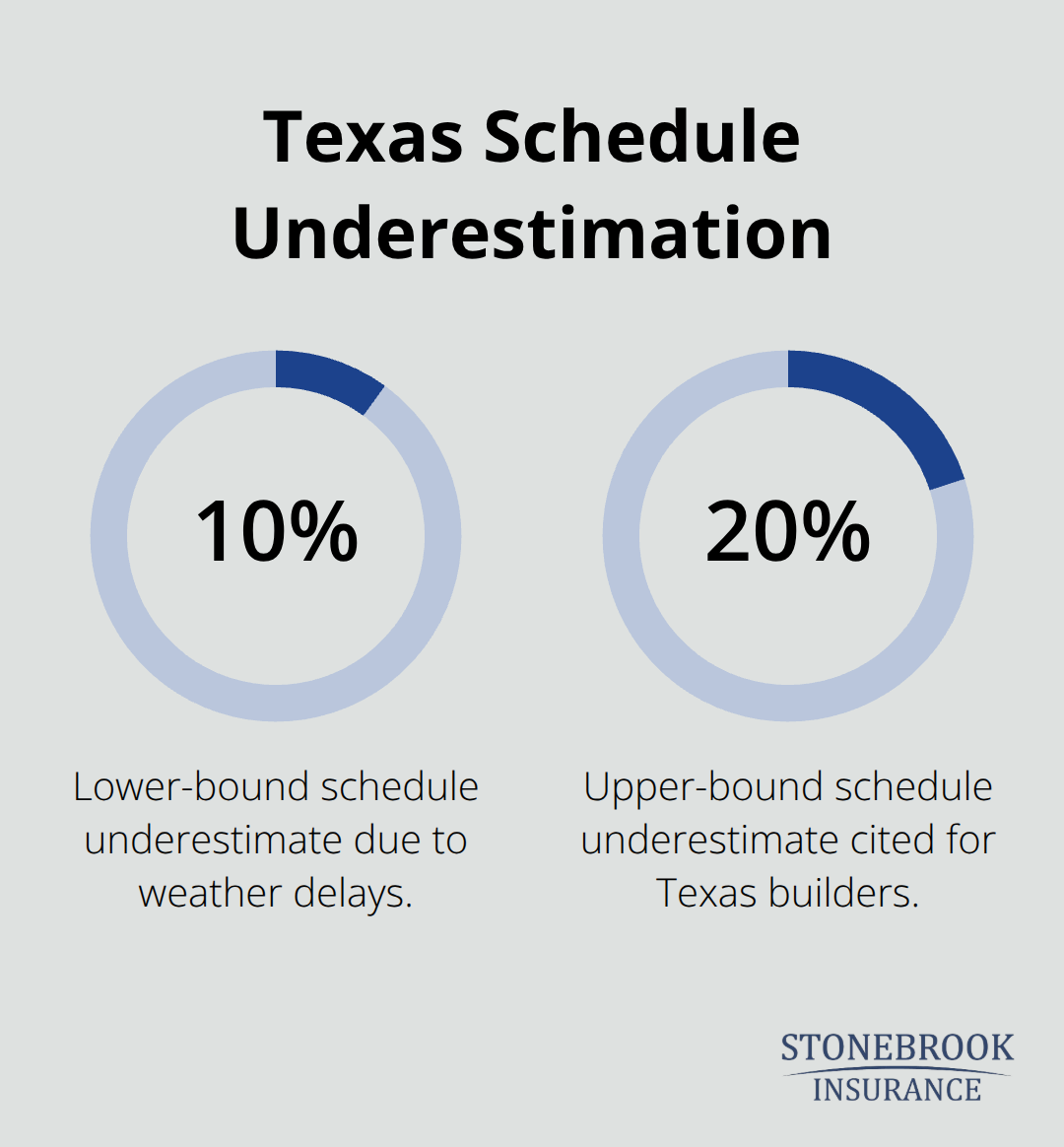
A project that runs longer than anticipated leaves you exposed if your policy expires before completion. Most Texas builders underestimate construction duration by 10 to 20 percent based on weather delays alone, creating a gap in protection when it matters most. You should review your project timeline carefully and build in a buffer period beyond your contractor’s estimated finish date.
The National Association of Home Builders defines substantial completion as the point when the structure becomes weather-tight and habitable, though your specific policy language may vary.
Materials and Equipment Require Specific Attention
Your policy should explicitly list high-value items stored on-site, particularly copper wiring and other materials frequently targeted by theft. Texas construction theft costs the industry significant losses annually, making this protection financially critical rather than optional. Equipment rental companies often require builders risk coverage naming them as interested parties before they deliver machinery to your site. Temporary structures like job sheds, portable toilets, and fencing receive coverage under most policies, though you should verify this explicitly with your carrier. Most policies exclude materials stored off-site or in a warehouse before delivery, so don’t assume your coverage extends to these scenarios.
Understanding What Stays Excluded
Damage caused by faulty workmanship, design defects, or failure to follow building codes falls outside coverage regardless of how the damage manifests. Weather-related exclusions sometimes apply to damage occurring after the policy’s expiration date, even if the weather event itself occurred during coverage. Your policy won’t cover theft by employees or intentional damage by project participants, creating gaps that other insurance products must address separately. Completed work and finished structures face different risk profiles than projects under construction, which is why builders risk policies terminate at substantial completion.
Selecting Coverage That Matches Your Project
The specific protection you need depends on your project type, timeline, and materials on-site. Residential projects, commercial developments, and renovation work each present different risk profiles that affect policy selection. Understanding what your project actually requires (rather than purchasing generic coverage) helps you avoid paying for unnecessary protection while maintaining adequate safeguards. Your next step involves comparing how different policies address your particular risks and identifying which carrier offers the protection your Texas construction project demands.
How to Choose the Right Builders Risk Policy for Your Texas Project
Document Your Project Assets and Timeline
Start by recording exactly what sits on your job site and what timeline you’re working with. Most contractors underestimate both the value of materials present at any given time and how long their projects actually take. Walk your site and photograph high-value items like copper wiring, HVAC equipment, and temporary structures. Calculate the replacement cost if theft or weather damage destroyed everything you see, then add 20 percent for items you will stage there over the coming months. This number becomes your coverage limit baseline.
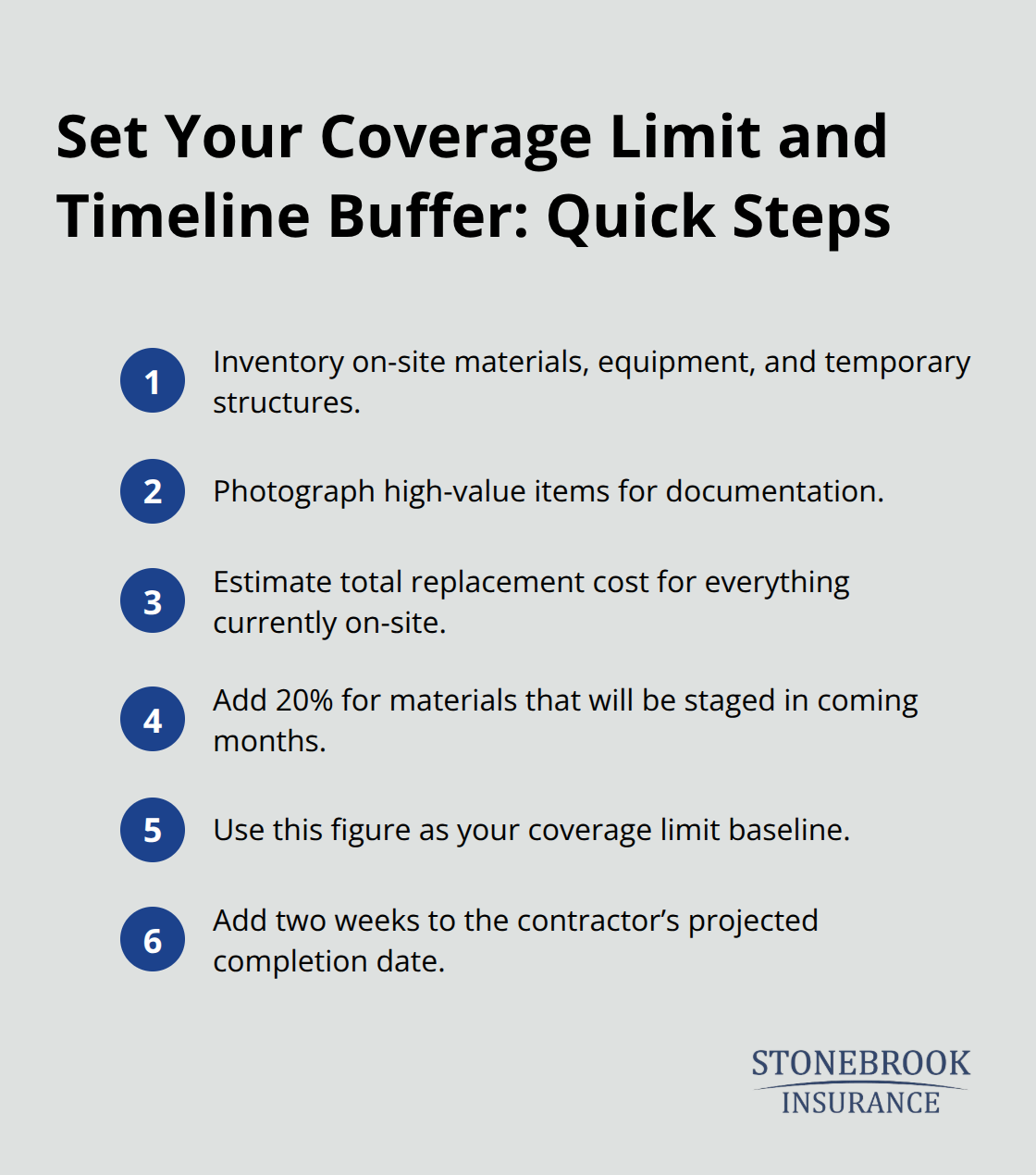
Next, identify your actual project completion date by adding two weeks to your contractor’s estimate, because Texas weather delays are nearly universal. This buffer protects you from coverage gaps when unexpected conditions extend your timeline.
Request Detailed Quotes from Multiple Carriers
Contact three to five insurance carriers and request quotes using identical project details. Don’t accept quotes based on estimated values or generic assumptions. Carriers offer builders risk policies, but their quotes often miss Texas-specific exposures that regional specialists understand better. Request that each quote explicitly address theft coverage, equipment stored on-site, and the exact date coverage terminates.
Compare not just premium costs but what each policy actually excludes. A policy $200 cheaper per month becomes expensive when it doesn’t cover the specific materials or equipment your project relies on.
Work with Local Agents Who Understand Texas Construction
Local agents who work regularly with Texas construction carry advantages that online quotes simply cannot match. An agent familiar with your specific area knows which carriers respond fastest to claims, which policies actually cover temporary job structures, and whether your project timeline creates coverage gaps. Ask potential agents how many construction claims they’ve handled in the past year and what issues they’ve seen go wrong. If they cannot cite specific examples, they lack the experience your project demands.
Request a detailed policy summary that shows what happens on your exact completion date, because substantial completion definitions vary between carriers and create real coverage differences. Most importantly, avoid selecting a policy based purely on price. The contractor who saves $300 on premiums but loses $50,000 worth of equipment to theft has made a terrible financial decision. Your policy should match your actual project risks, not your budget preferences.
Final Thoughts
Builders risk insurance in Texas protects your construction investment from weather, theft, and accidents that general liability policies simply don’t handle. Your project timeline, materials on-site, and completion date all shape what protection you actually need, which is why generic policies fail contractors who don’t match coverage to their specific risks. The cheapest option often leaves gaps that become expensive when claims happen.
Documenting what sits on your job site and calculating realistic replacement costs starts the process correctly. Add a buffer to your contractor’s timeline estimate because Texas weather delays are nearly universal, then request detailed quotes from multiple carriers using identical project information. Compare what each policy excludes rather than focusing only on premium costs.
Local agents understand the specific exposures your projects face and can cite real examples of what goes wrong when contractors choose policies based on price alone. Contact Stonebrook Insurance to discuss your next construction project and secure builders risk insurance Texas that matches your actual project needs rather than generic assumptions.
The information provided in this blog is for general informational purposes only and does not constitute legal, financial, or insurance advice. Coverage options, terms, and availability may vary. Please consult with a licensed professional for advice specific to your situation.
Artificial intelligence may have been used to generate text and images in some blog articles.