

Your home is where your family’s most valuable possessions live-both the physical structure and the memories you’ve built there. Home insurance for families should cover far more than just the basics, yet many policies leave significant gaps that could cost you thousands when you need protection most.
At Stonebrook Insurance, we’ve seen families discover these gaps only after a loss occurs. This guide walks you through what standard policies cover, where the holes are, and how to build protection that actually matches your family’s needs.
What Your Home Insurance Actually Covers
Understanding the Three Core Protections
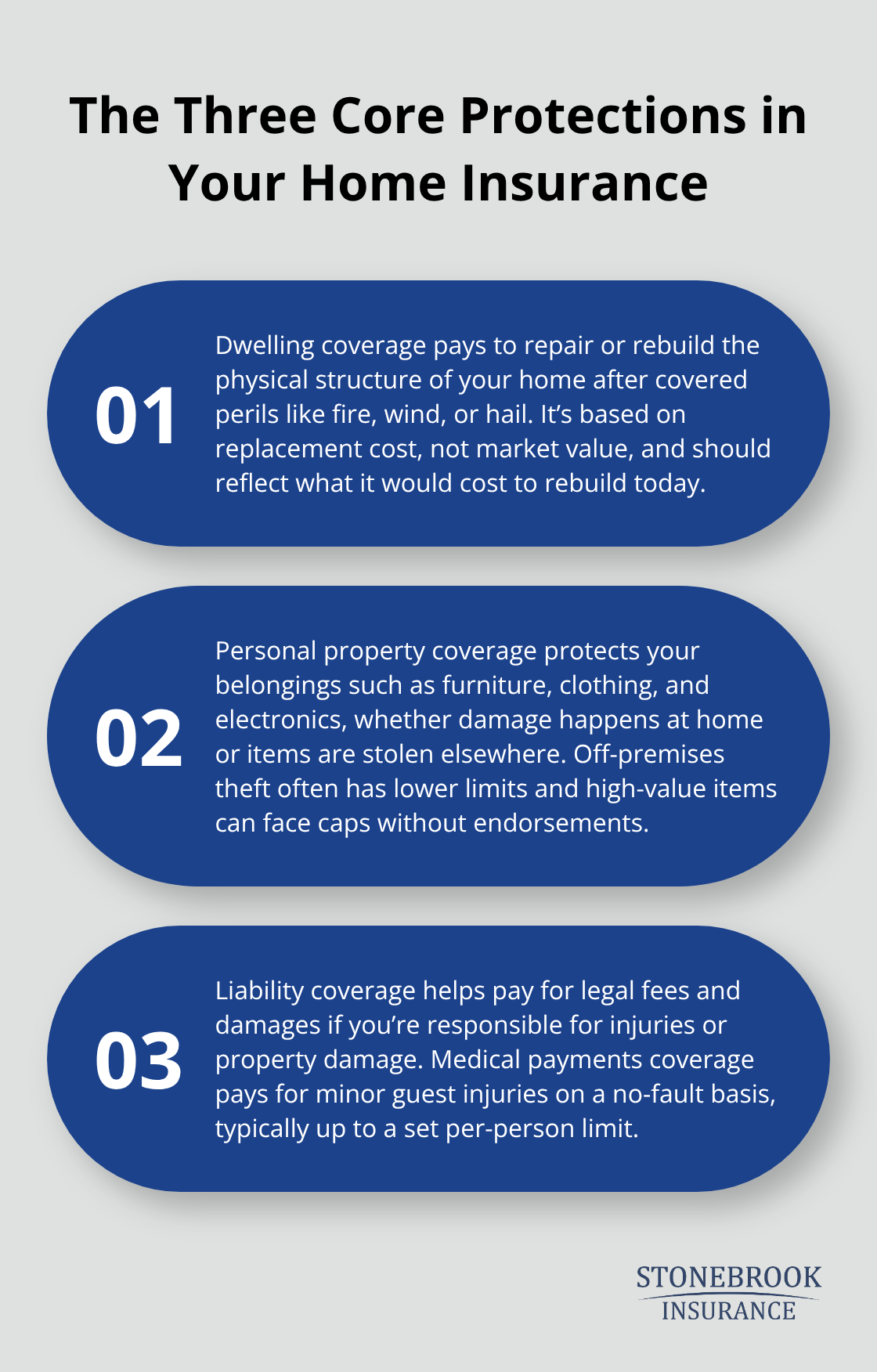
Standard home insurance policies protect three distinct areas, and understanding exactly what falls under each matters far more than most families realize. The National Association of Insurance Commissioners reports that approximately 89% of homeowners believe their policies cover more than they actually do, which means most families operate under false assumptions about their protection. Your policy splits into three separate protections: dwelling coverage, personal property coverage, and liability protection with medical payments.
Dwelling Coverage and Structural Protection
Dwelling coverage pays for structural damage to your home’s frame, walls, roof, and attached structures like garages or decks when damage results from covered perils such as fire, wind, or hail. This coverage reimburses you based on your home’s replacement cost, not its market value-a distinction that many homeowners miss. If your home would cost $450,000 to rebuild today but is worth $380,000 on the market, your dwelling coverage should reflect that $450,000 replacement figure.
Personal Property Coverage for Your Belongings
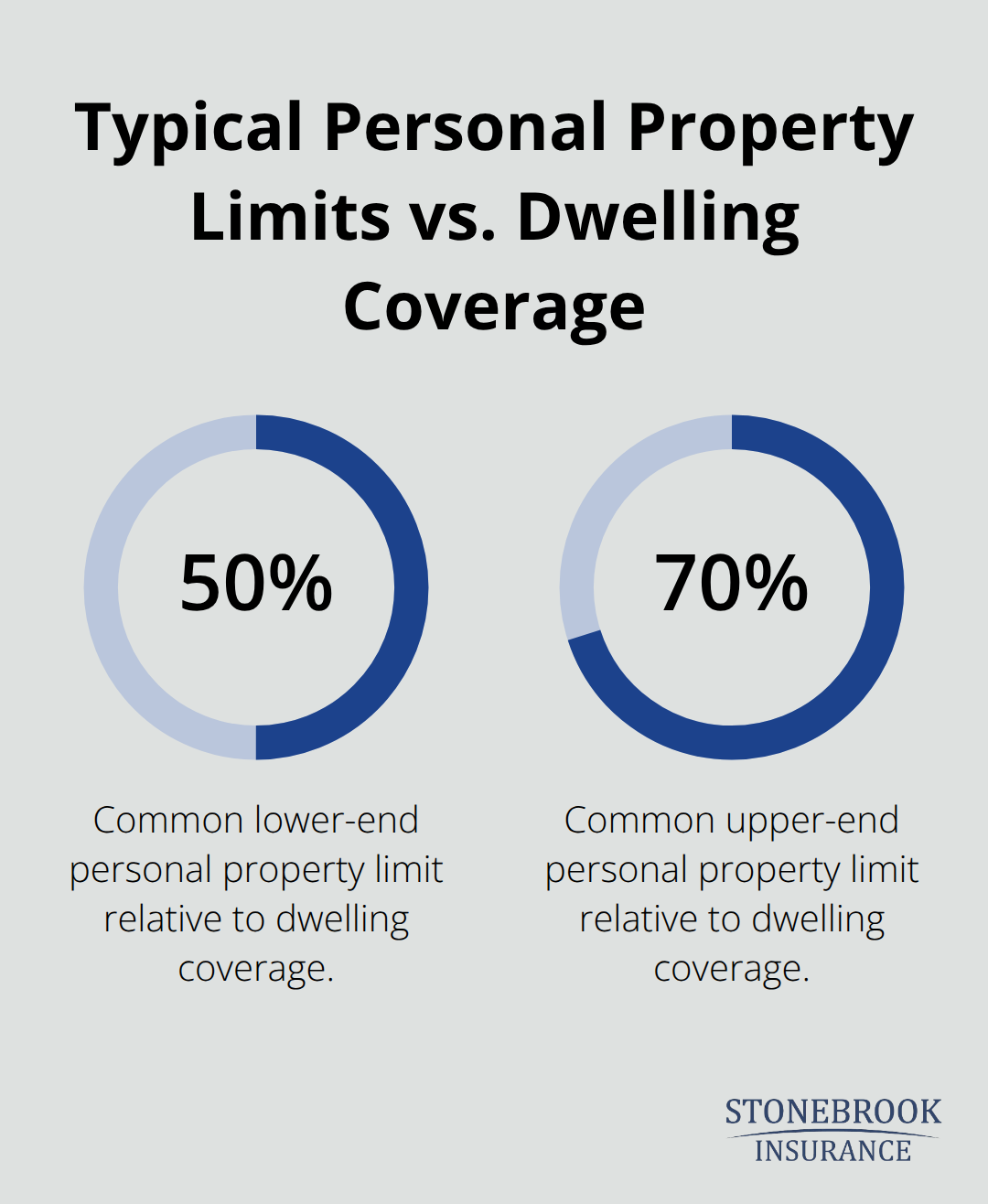
Personal property coverage protects your belongings inside the home, including furniture, electronics, clothing, and kitchen appliances. This coverage applies whether items are damaged at home or stolen elsewhere, though theft away from home often has lower limits. Most policies cap personal property at 50-70% of your dwelling coverage amount, which creates a significant problem for families with valuable collections or high-end possessions.
Liability and Medical Payments Protection
Liability protection shields your family when someone is injured on your property or when you accidentally damage someone else’s property, covering legal fees and medical expenses up to your policy limits. Medical payments coverage operates separately and pays for minor injuries to guests on your property without requiring them to prove fault or sue you, typically covering up to $5,000 per person depending on your policy. The Insurance Information Institute found that the average liability claim costs around $32,000, yet many families carry limits of only $100,000 or $300,000, which sounds adequate until you face a serious injury lawsuit.
If a visitor slips on your icy driveway and requires surgery costing $80,000, or if your child accidentally injures a neighbor, your liability limits determine how much protection you actually have. Most standard policies leave you dramatically underprotected in this area, particularly if you have a pool, trampoline, or live on a property where people frequently visit. This gap between what families think they have and what they actually have sets the stage for the next section, where we examine the specific holes that appear in most home insurance policies.
Common Gaps in Home Insurance Policies
Flood Damage and Water-Related Issues
Your standard home insurance policy excludes flood damage entirely, yet water damage accounts for a significant portion of homeowner insurance claims. If a hurricane, heavy rainfall, or overflowing river floods your basement and destroys $50,000 worth of belongings and structural components, your standard policy pays nothing-you need a separate flood insurance policy for that protection. Many policies also exclude or severely limit coverage for sewer backups, foundation cracks from water pressure, and damage from water seeping through walls, meaning a $15,000 water intrusion event could fall completely outside your coverage.
High-Value Items and Collections
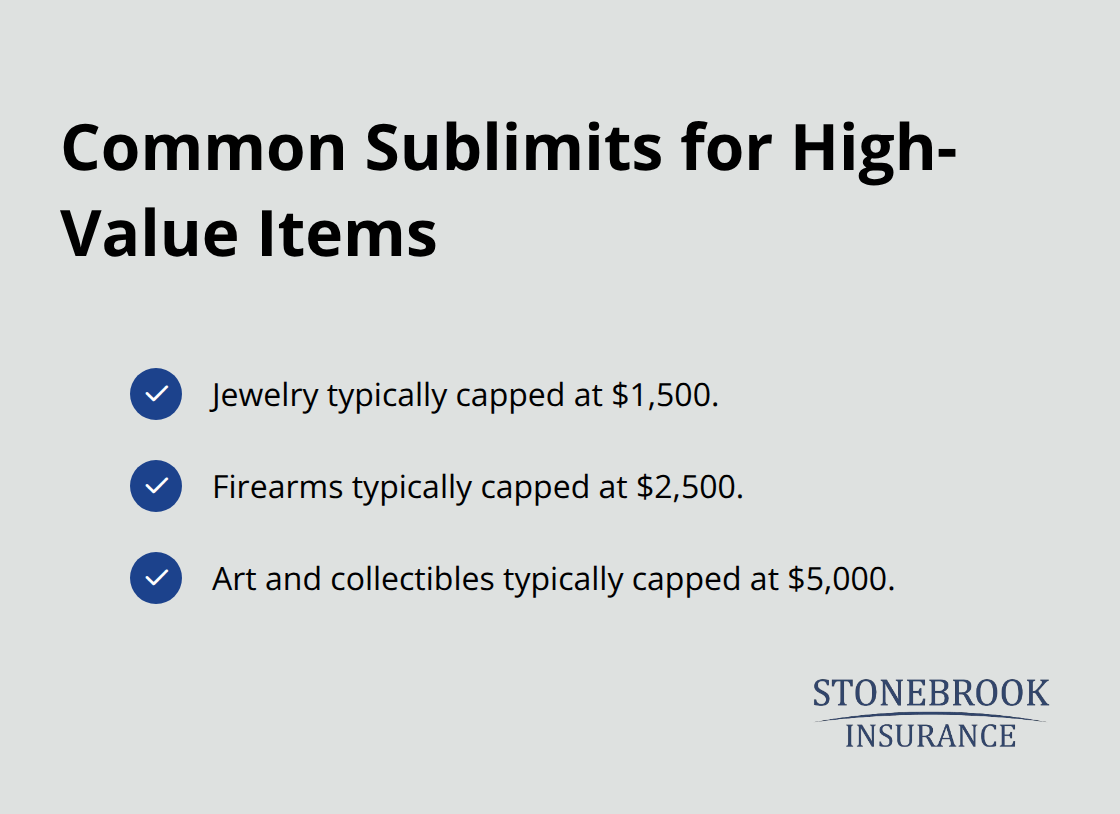
Your personal property coverage typically caps items at specific limits-often just $1,500 for jewelry, $2,500 for firearms, and $5,000 for art and collectibles. If you own engagement rings worth $8,000, a gun collection valued at $12,000, or artwork and antiques totaling $20,000, your standard policy covers only a fraction of the actual loss. You need scheduled personal property endorsements that list and value each high-value item individually, which ensures full replacement cost protection rather than the default percentage-based limits that leave you dramatically underinsured.
Business Equipment and Home-Based Work
Standard home insurance explicitly excludes business equipment, inventory, and liability related to business operations, meaning if your home office contains $8,000 in computer equipment, cameras, or tools for freelance work, that equipment receives zero coverage under your personal property protection. Most home-based business operators work without proper coverage because they assume their homeowners policy protects their business assets. If a client visits your home office and trips over equipment, or if a fire destroys your business inventory stored in your garage, your homeowners policy denies the claim because it’s business-related.
You need a home-based business policy or business personal property coverage that specifically protects equipment, inventory, and business liability. These three gaps-water damage, high-value items, and business assets-represent the most common reasons families face financial loss after an incident. Identifying which gaps apply to your specific situation requires an honest assessment of what you actually own and how you use your home, which leads directly into evaluating the right coverage levels for your family’s unique circumstances.
How to Choose the Right Coverage for Your Family
Assess Your Home’s Replacement Value
Choosing the right coverage starts with a number, not a feeling. You need your home’s replacement cost, which is what it would actually cost to rebuild your house today, not what you paid for it or what it might sell for. Average construction costs in 2026 range from $150 to $250 per square foot depending on your region and home quality, which means a 2,500-square-foot home in a moderate-cost area could run $375,000 to $625,000 to rebuild.
Get a professional replacement cost estimate from a contractor or use a cost estimator tool, which accounts for your specific location, materials, and construction quality. Many families guess at this number and then discover their dwelling coverage falls $100,000 short after a major fire or storm. Your coverage limit should never fall below 80% of replacement cost and ideally should match it exactly, otherwise your insurer can reduce your payout through a coinsurance penalty that leaves you paying thousands out of pocket.
Evaluate Your Personal Possessions
Personal possessions require an equally specific approach. Walk through your home with your phone and photograph everything you own, then add up the actual replacement costs using current retail prices, not what you paid years ago. Your current furniture might have cost $3,000 in 2015, but replacing it today costs $5,200.
Most families carry personal property limits of 50-70% of their dwelling coverage, which creates a coverage gap the moment you actually add up what’s inside. If your dwelling coverage is $500,000, you’re probably insured for only $250,000 to $350,000 in belongings, yet your actual inventory might total $180,000 to $220,000.
High-value items like jewelry, firearms, electronics, and collectibles need scheduled endorsements that list each item and its value, bypassing the default per-item limits that cap jewelry at $1,500 and electronics at $2,500.
Review Liability Limits and Additional Endorsements
Liability limits should start at $300,000 minimum for families with children, pools, or properties where guests frequently visit, and $500,000 if you have a trampoline or high-risk features. A visitor who slips on your icy driveway and requires surgery, or a neighbor injured by your child’s actions, can trigger claims that exhaust standard $100,000 or $300,000 limits within hours.
Additional endorsements protect specific gaps in your standard policy. Scheduled personal property endorsements list high-value items individually and cover them at full replacement cost rather than applying percentage-based limits. Water backup coverage protects against sewer backups and foundation seepage that standard policies exclude entirely. Stonebrook Insurance helps families across Texas evaluate these endorsements and calculate accurate coverage limits rather than accepting defaults that create dangerous gaps.
Final Thoughts
Home insurance for families works only when it matches what you actually own and how you actually live. The gaps we’ve covered-flood damage, high-value items, and business equipment-represent real money out of your pocket when loss occurs, yet most families discover these gaps only after filing a claim. The three core protections in your policy create a foundation, but that foundation crumbles without accurate replacement cost estimates, honest personal property inventories, and liability limits that reflect genuine risk.
A $100,000 liability limit sounds substantial until a serious injury lawsuit arrives, and a 50% personal property limit feels reasonable until you add up what’s actually inside your home and realize you’re underinsured by $50,000 or more. Working with a local agent transforms this from a frustrating guessing game into a straightforward process. An agent who knows your community, your property risks, and your family’s specific situation can identify gaps that online quotes and standard policies miss entirely.
Your next step is straightforward: gather your home’s replacement cost estimate and your personal property inventory, then connect with an agent who can review your current coverage against what you actually need. Visit Stonebrook Insurance to start that conversation with someone who knows your area and your family’s situation.
The information provided in this blog is for general informational purposes only and does not constitute legal, financial, or insurance advice. Coverage options, terms, and availability may vary. Please consult with a licensed professional for advice specific to your situation.
Artificial intelligence may have been used to generate text and images in some blog articles.