

Your luxury home deserves protection that matches its value. Standard homeowners policies fall short when it comes to high-end materials, custom construction, and valuable collections.
At Stonebrook Insurance, we know that high value dwelling insurance fills these gaps. This guide walks you through specialized coverage options designed for homes like yours.
What Defines a High Value Home
Custom Construction and Premium Materials
Homes worth $1 million or more feature custom construction, architectural upgrades, and finishes that standard homeowners policies simply don’t account for. High value homes often include materials like imported marble, custom millwork, smart home systems, and energy-efficient upgrades that add to rebuild costs compared to standard construction. A home built with these specifications requires replacement cost coverage that reflects actual reconstruction expenses, not just the land value or basic structure price.
Market Appreciation and Location
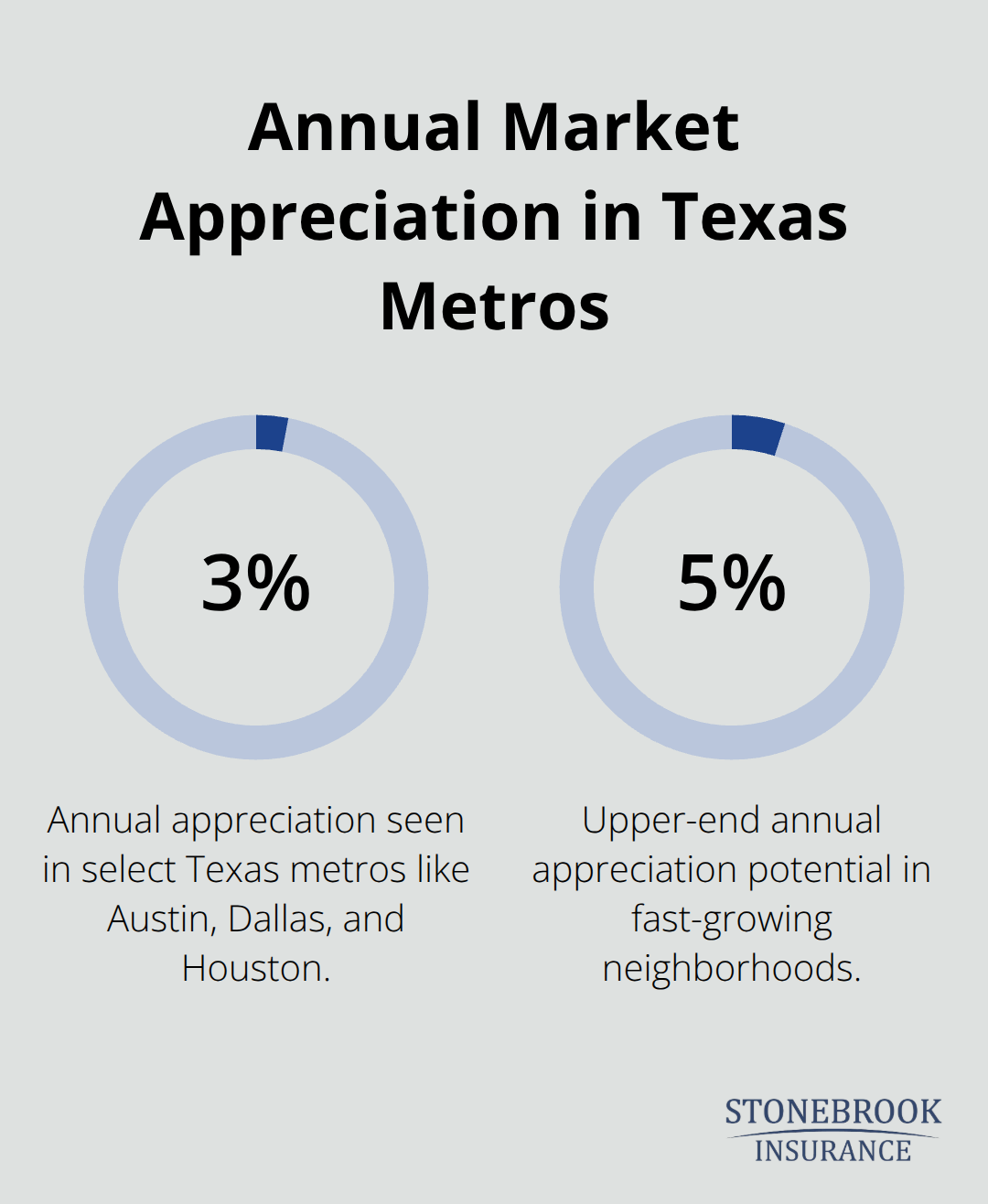
Location matters significantly. Homes in appreciating markets like Austin, Dallas, and Houston gain 3 to 5 percent annually in market value, meaning a $2 million home today could need $2.3 million in coverage within five years just to stay adequately insured. Geographic factors like proximity to water, desirable school districts, and neighborhood development patterns drive these increases.
Valuable Collections and Personal Property
High value homes typically contain art collections, jewelry, antiques, and other valuables that represent substantial wealth. A single painting, watch collection, or jewelry piece can be worth $50,000 to $500,000 or more, yet standard homeowners policies cap personal property coverage at 50 to 70 percent of dwelling coverage, usually with sub-limits of just $1,500 to $2,500 per item.
The Coverage Gap Problem
This gap between what your home is worth and what standard policies cover creates real financial exposure. If your custom kitchen renovation cost $150,000 but your policy covers dwelling damage at replacement cost based on a $400,000 home value assumption, you face underinsurance from day one. The same applies to collections. A homeowner with a $200,000 fine art collection and a standard policy might find only $10,000 of that collection covered under the personal property limit.
Why Specialized Coverage Matters
High value dwelling coverage starts with an accurate assessment of what your home would cost to rebuild exactly as it exists today, plus detailed scheduling of individual valuables so each piece receives the protection it deserves. This specialized approach differs fundamentally from the one-size-fits-all method of standard policies. Custom home builders and high-net-worth clients across Texas understand that their homes require this level of evaluation and precision. The next section explores the specific coverage gaps that standard homeowners policies leave unaddressed.
Where Standard Policies Fall Short
The Dwelling Coverage Problem
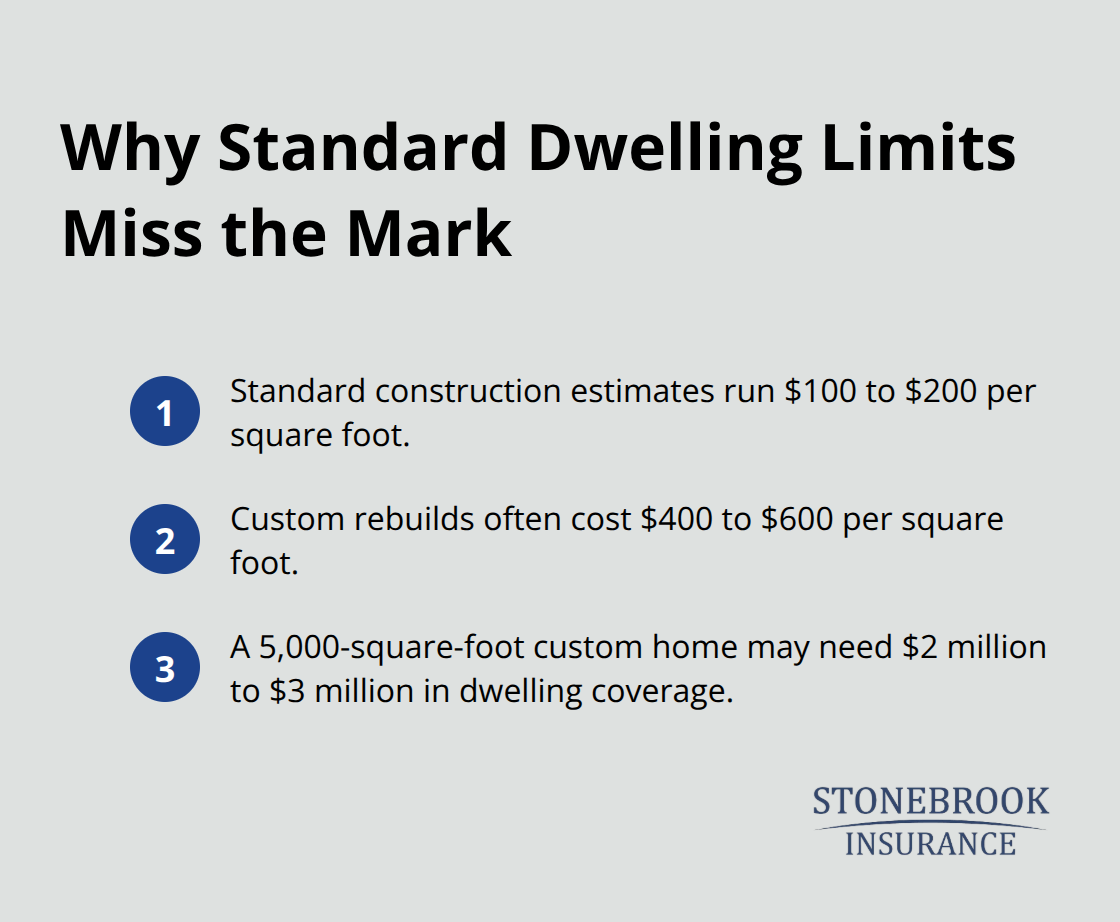
Standard homeowners policies operate on a formula that works fine for typical suburban homes but collapses when applied to high value properties. The insurance industry bases standard dwelling coverage limits on replacement cost estimates derived from regional building data, usually ranging from $100 to $200 per square foot for standard construction. A 5,000-square-foot home in this model receives an estimated $500,000 to $1 million in dwelling coverage. But custom homes with imported materials, architectural details, and premium finishes regularly cost $400 to $600 per square foot to rebuild. That same 5,000-square-foot custom home actually needs $2 million to $3 million in coverage just to match reconstruction costs.
The gap isn’t a minor oversight-it’s the difference between full recovery and significant financial loss after a total loss event. When a fire destroys a home with a $150,000 custom kitchen, $80,000 in smart home automation, and imported Italian tile throughout, a standard policy that caps dwelling coverage at $1.2 million leaves you short by hundreds of thousands of dollars. Many insurers apply coinsurance penalties if you’re underinsured, meaning you recover even less than your policy limits suggest.
Personal Property Coverage Limits
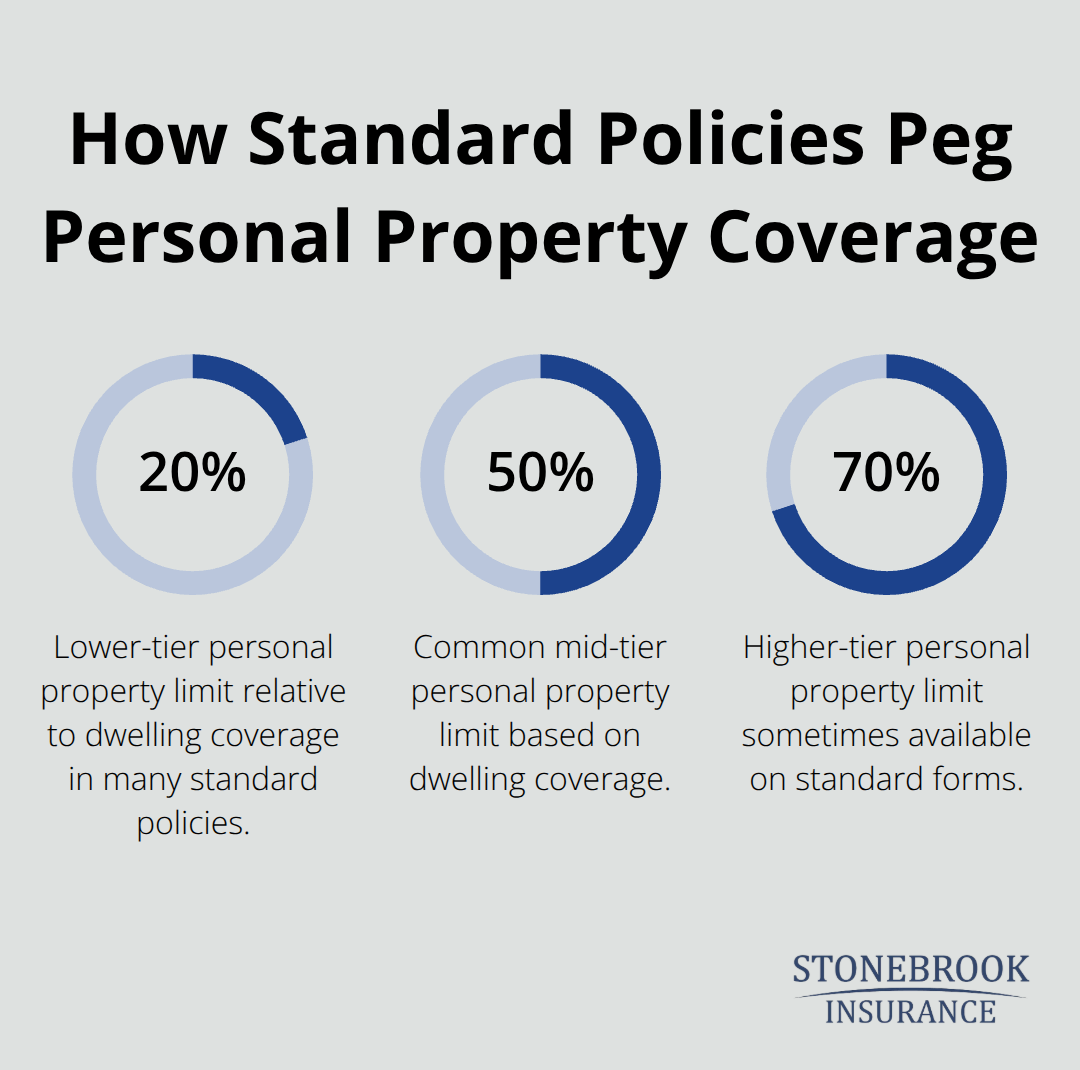
Personal property coverage creates a second major gap that most homeowners don’t discover until they file a claim. Standard policies typically cover personal property at a percentage of dwelling coverage, such as 20%, 50%, or 70%, with individual item limits of $1,500 to $2,500 for jewelry and $2,500 to $5,000 for fine art. A homeowner with a $300,000 jewelry collection, a $150,000 wine cellar, or a $200,000 art collection finds almost none of it adequately protected under these sub-limits.
Liability Exposure for High-Net-Worth Homeowners
Liability coverage presents a third exposure that standard policies fail to address. Standard policies include $100,000 to $300,000 in liability protection, which sounds substantial until you understand that a single serious injury lawsuit from a guest or contractor can easily exceed $1 million in damages. High-net-worth homeowners face disproportionate liability risk because plaintiffs’ attorneys target defendants with visible assets. A guest injured on your property learns about your custom home, your valuable collections, and your income level during discovery-and adjusts their settlement expectations accordingly.
What Adequate Protection Requires
Homeowners with significant assets and custom properties need dwelling limits that reflect actual reconstruction costs, scheduled personal property coverage for individual valuable items with limits matching their appraised values, and liability limits of at least $1 million (often higher depending on net worth and property characteristics). Standard policies simply don’t accommodate this level of precision or protection. The next section explores the specialized coverage options that address these gaps and protect your investment properly.
How to Structure Coverage for Your Custom Home
Replacement cost coverage for custom homes
Replacement cost coverage forms the foundation of any high value dwelling policy, and it operates fundamentally differently from the standard approach most homeowners encounter. Instead of estimating rebuild costs based on regional averages, replacement cost coverage for custom homes requires a detailed assessment of your specific property-materials, finishes, architectural features, and construction methods. This means hiring a professional cost estimator or working with your insurer to document that Italian marble, the $80,000 smart home system, the custom millwork, and imported fixtures all factor into the actual rebuild figure.
A 5,000-square-foot custom home in Texas with premium finishes typically costs $350 to $500 per square foot to rebuild, translating to $1.75 million to $2.5 million in dwelling coverage. Many homeowners underestimate these costs by 30 to 40 percent when they rely on standard formulas. The key action here is obtaining written reconstruction cost estimates from local custom builders who understand your home’s specifications-not relying on online calculators or your agent’s educated guess.
Scheduled Personal Property Coverage
Scheduled personal property coverage addresses the second critical gap by listing individual valuables separately on your policy with their own limits and coverage terms. Instead of hoping a $200,000 art collection fits within a $10,000 sub-limit, you schedule each piece with its appraised value. A painting worth $75,000 receives $75,000 in coverage. A jewelry collection valued at $150,000 gets scheduled at that amount.
This approach requires appraisals from qualified professionals-certified appraisers for art, gems, and jewelry-but those appraisals protect you during claims. Insurers typically waive deductibles on scheduled items and often cover them against broader perils than standard policies allow.
Enhanced Liability and Additional Living Expenses
Enhanced liability protection addresses the reality that high-net-worth homeowners face outsized lawsuit exposure. Standard policies cap liability at $100,000 to $300,000, which leaves you exposed if a guest suffers a serious injury on your property. Umbrella policies layer additional liability coverage on top of your homeowners policy, typically in increments of $1 million. A homeowner with $5 million in assets should carry at least $1 million to $2 million in combined liability coverage across homeowners and umbrella policies.
Additional living expenses coverage becomes especially important for custom homes because the cost to rent comparable temporary housing during reconstruction far exceeds what standard policies anticipate. If your home requires eighteen months to rebuild due to custom finishes and material sourcing, your additional living expenses coverage should reflect actual monthly rental costs in your market, not a formula based on dwelling coverage percentages.
Building Your Customized Policy
The process of structuring coverage for a custom home requires detailed conversations about your home’s specific features, your collections, and your financial exposure-then translating that information into precise coverage limits and scheduled items. This specialized approach takes more time than standard policy placement, but it eliminates the gap between what you think you’re covered for and what you’re actually protected against. Working with an agency that shops multiple carriers helps you find insurers willing to write high value dwelling policies with the precision your home demands.
Final Thoughts
Standard homeowners policies treat all homes the same way, which works fine for typical suburban properties but fails spectacularly for custom homes with premium finishes, valuable collections, and significant financial exposure. A $2 million custom home with imported materials and architectural details needs dwelling coverage that reflects those specifics, not a formula based on regional averages. Personal property sub-limits of $1,500 to $2,500 per item leave collections worth hundreds of thousands of dollars almost entirely unprotected, and liability limits of $100,000 to $300,000 expose high-net-worth homeowners to catastrophic losses from a single lawsuit.
High value dwelling insurance solves these problems by replacing guesswork with precision. Replacement cost coverage based on detailed reconstruction estimates ensures your dwelling limits match actual rebuild costs, while scheduled personal property coverage protects individual valuables at their appraised values instead of burying them under inadequate sub-limits. Enhanced liability protection through umbrella policies shields your assets from outsized lawsuit exposure, and additional living expenses coverage reflects the actual cost of temporary housing during reconstruction of a custom home.
The path forward starts with an honest assessment of what your home would cost to rebuild today, item by item. Gather written estimates from local custom builders who understand your property’s specifications, obtain professional appraisals for art, jewelry, and collectibles, and calculate your total liability exposure based on your net worth and property characteristics. Contact Stonebrook Insurance to evaluate your current coverage and close the gaps that standard policies leave behind.
The information provided in this blog is for general informational purposes only and does not constitute legal, financial, or insurance advice. Coverage options, terms, and availability may vary. Please consult with a licensed professional for advice specific to your situation.
Artificial intelligence may have been used to generate text and images in some blog articles.