
Running a contracting business means facing real risks every day. From job site accidents to equipment damage, one unexpected incident can threaten your entire operation.
Commercial contractor insurance protects you against these financial disasters. We at Stonebrook Insurance help contractors understand their coverage options so they can focus on what they do best-building.
What Your Commercial Contractor Insurance Actually Covers
General Liability: Your First Line of Defense
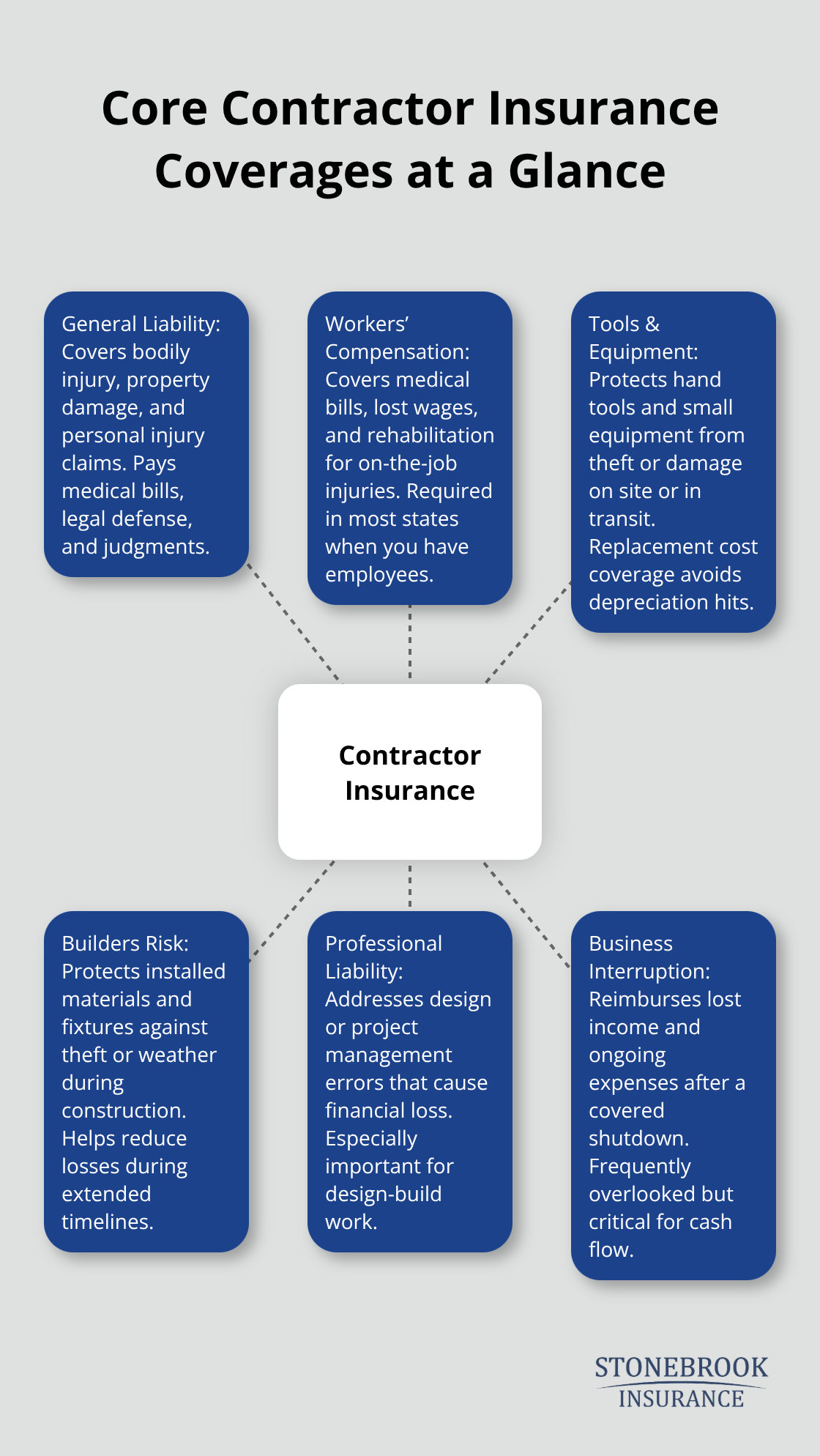
General liability insurance helps pay for medical costs and legal fees when a client or third party suffers injury on your job site or when your work damages someone else’s property. This coverage pays for medical expenses, legal defense costs, and court judgments-expenses that can easily reach six figures after a serious accident. General liability typically covers bodily injury, property damage, and personal injury claims, with standard limits ranging from $1 million per occurrence to $2 million aggregate. According to Coverdash data, small remodeling contractors pay around $1,400 annually for general liability, while roofing contractors with higher exposure face median premiums around $18,000. The difference reflects your specific trade risk.
Most client contracts require proof of general liability coverage before you start work, so this isn’t optional-it’s a business requirement. Your policy should match your contract minimums, which often demand $1 million per occurrence at minimum.
Workers’ Compensation: Protecting Your Team
Workers’ compensation covers medical bills, lost wages, and rehabilitation costs when an employee suffers injury on the job. In most states, this coverage is legally required if you have employees, and California mandates it for licensed contractors regardless of employee count. Premiums scale directly with payroll, so a roofing contractor with multiple crew members might pay $12,000 to $20,000 annually while a solo operator pays far less.
Tools and Equipment: Safeguarding Your Productivity
Tools and equipment coverage protects your hand tools, power tools, safety gear, and small equipment from theft or damage at the job site or in transit between projects. This inland marine insurance matters more than contractors typically realize-losing your equipment means losing productivity and income until you replace it. Replacement cost coverage is worth the extra premium because actual cash value policies depreciate your tools immediately.
Review your equipment inventory annually and update your coverage limits as you acquire new tools or specialized gear, since underinsurance leaves you exposed when loss happens. Understanding these three core coverages positions you to identify gaps in your protection and move forward with confidence into the specific risks your contracting business actually faces.
Common Risks Contractors Face and How Insurance Mitigates Them
On-Site Injuries and Accidents
Job site injuries represent the largest financial exposure for most contractors, and the numbers prove why workers’ compensation alone doesn’t cover everything. A serious fall or equipment accident triggers general liability claims on top of workers’ comp costs, especially if a third party was involved or if negligence is alleged. According to the British Safety Council, common construction hazards include falls from height, slips, excessive noise exposure, and falling objects-each with distinct injury patterns and recovery timelines.
A fall from a 20-foot scaffold costs far more than medical treatment. OSHA fines reach up to $165,514 per violation, lost productivity mounts daily, and the injured worker may file a personal injury lawsuit beyond workers’ comp coverage. Your general liability policy covers the legal defense and settlement costs that workers’ compensation won’t touch, making this coverage non-negotiable.
Property Damage and Third-Party Claims
Property damage claims happen constantly on job sites. You accidentally damage a client’s existing structure while demolishing an interior wall, or your subcontractor punctures a water line during excavation. These scenarios create third-party property damage claims that reach tens of thousands of dollars.
General liability with adequate limits-most contracts now demand $1 million per occurrence minimum-covers repair costs and liability defense. Builders risk coverage protects the materials and fixtures already installed against theft or weather damage, preventing additional loss during extended project timelines. For design-build projects, professional liability insurance becomes essential as well, since errors in design or project management trigger client claims for financial losses separate from bodily injury or property damage.
Project Delays and Financial Loss
Project delays triggered by unforeseen site conditions, permit hold-ups, or weather events create real financial bleeding. While insurance won’t prevent delays, builders risk coverage protects installed materials and fixtures against theft or weather damage, preventing additional loss when timelines extend.
Business interruption coverage compensates lost income and ongoing expenses like payroll and loan payments when a major incident halts operations (though most contractors overlook this protection entirely). Larger projects with complex scopes require excess liability beyond your primary general liability policy, since a single catastrophic claim can exhaust standard limits. Your specific trade, project size, and contractual requirements determine whether you need professional liability, pollution liability for environmental risks, or specialized equipment coverage for high-value machinery. Understanding these exposure areas helps you identify which coverages protect your operation most effectively.
Selecting Coverage That Matches Your Real Exposure
Assess Your Actual Business Profile
Start by listing your trade, crew size, project types, and contract requirements instead of guessing at coverage limits. A plumbing contractor doing residential service calls faces completely different risks than a commercial HVAC installer working on multi-story buildings, yet many contractors purchase identical policies.
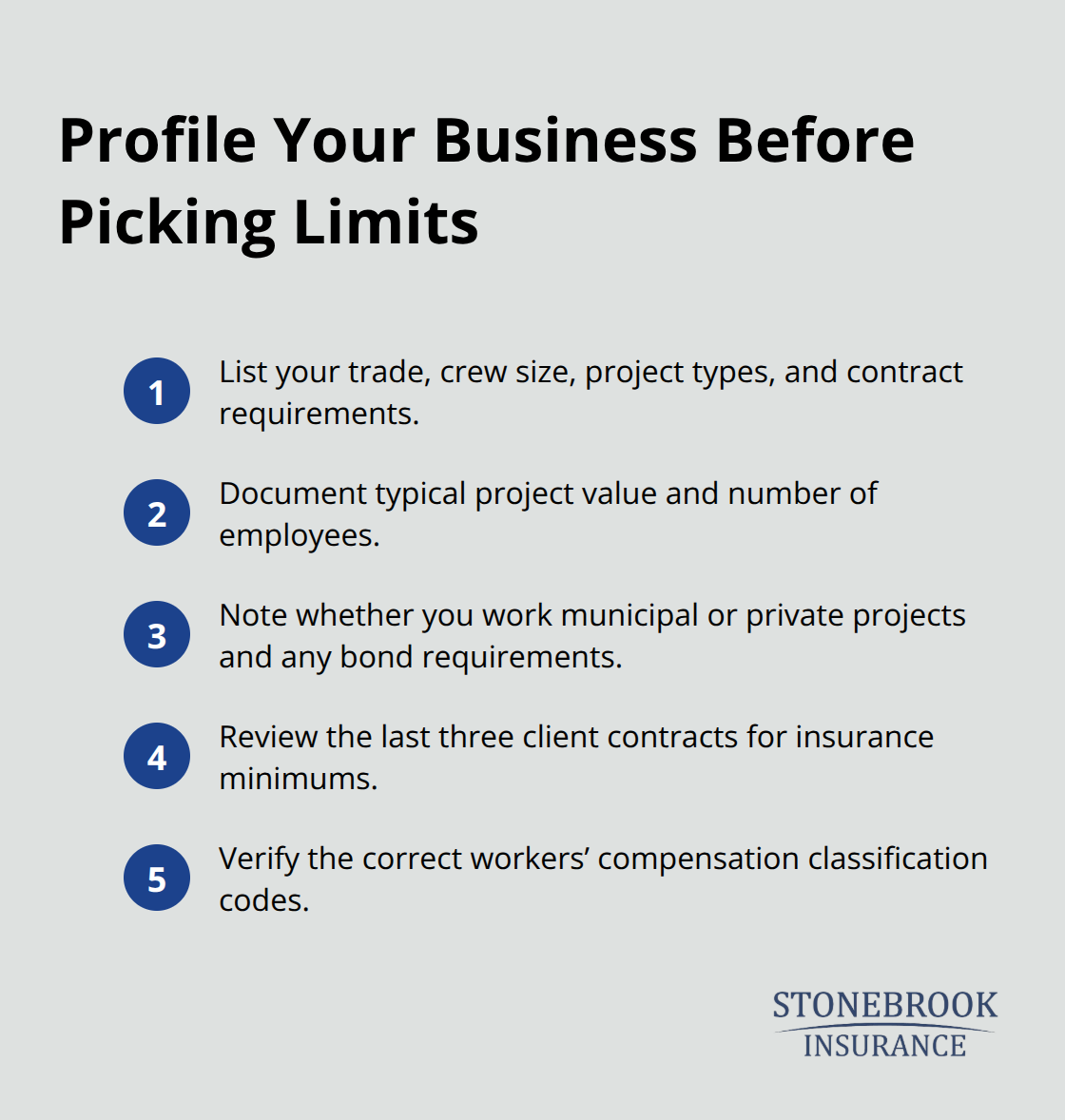
Document your typical project value, number of employees, and whether you work on municipal or private projects, since public works contracts often demand Miller Act bonds and specific liability minimums.
Review your last three client contracts and pull out every insurance requirement. Most specify minimum general liability limits of $1 million per occurrence, but some demand $2 million or higher depending on project scope. Your workers’ compensation classification code matters enormously too; misclassifying your crew can trigger audit penalties and leave gaps in coverage.
Compare Industry Benchmarks Against Your Costs
According to Coverdash data, plumbers pay an average of $115 per month, or $1,378 per year, for general liability insurance. These numbers shift based on payroll, equipment value, and claims history, so comparing your business profile against industry benchmarks helps identify whether your current premiums signal competitive pricing or overcharging.
Shop Multiple Carriers with Identical Specifications
Once you know your exposure, compare specific policy details across multiple carriers rather than price alone. The Hartford and Progressive both serve contractors but excel in different areas-The Hartford dominates workers’ compensation and risk engineering support while Progressive leads in commercial auto coverage, so your best policy might split between carriers.
Request identical coverage limits and deductibles from at least three insurers, then compare per-occurrence and aggregate liability limits, tools and equipment coverage amounts, and whether builders risk is available. Deductible selection directly impacts affordability; raising your deductible from $500 to $2,500 typically cuts your premium 15–25%, but only if you can afford the out-of-pocket cost after a claim.
Verify Subcontractor Coverage and Additional Insured Status
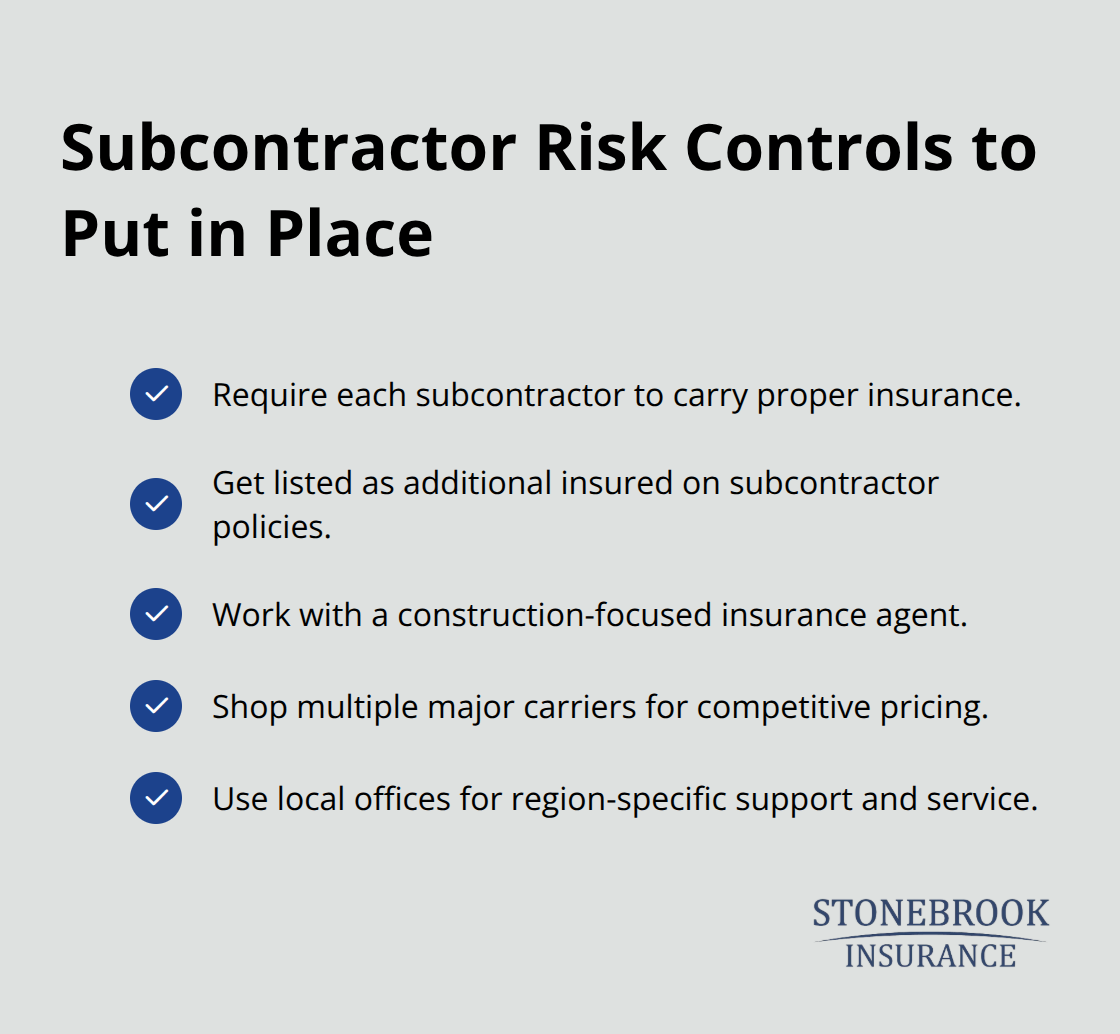
A construction-focused insurance agent who understands your specific trade will spot coverage gaps that online comparison tools miss and verify that your subcontractors carry proper insurance with you listed as additional insured-a detail that prevents catastrophic gaps when a subcontractor causes injury or damage. Stonebrook Insurance shops multiple major carriers to find competitive pricing tailored to your operation, and our three Texas locations (Comanche, McKinney, and Round Rock) mean you receive hands-on service from people who understand regional project requirements and contractor challenges.
Final Thoughts
Commercial contractor insurance forms the foundation that lets you bid confidently, sign contracts without fear, and operate knowing that one accident won’t destroy your business. The three core coverages-general liability, workers’ compensation, and tools and equipment protection-address the largest financial exposures contractors face daily, but your specific trade, crew size, and project types determine exactly which policies and limits you actually need. Pull your client agreements, document your equipment inventory, and compare your current premiums against industry benchmarks for your trade, since a plumber’s exposure differs completely from a roofing contractor’s yet many contractors purchase generic policies that leave gaps or waste money on unnecessary coverage.
Your subcontractors represent hidden risk that most contractors overlook. Requiring them to carry their own insurance and list you as additional insured prevents catastrophic gaps when someone else’s negligence creates a claim, and shopping multiple carriers with identical specifications reveals where you’re paying too much and where you’re underinsured. This detail separates contractors who sleep well at night from those who discover coverage problems after disaster strikes.
We at Stonebrook Insurance understand contractor challenges because we’ve served Texas construction businesses for over 30 years, and our team shops multiple major carriers to find competitive pricing tailored to your specific operation. With locations in Comanche, McKinney, and Round Rock, we provide the hands-on service and industry expertise that online tools can’t match, so contact Stonebrook Insurance today to review your current commercial contractor insurance coverage and identify gaps before they become expensive problems.
The information provided in this blog is for general informational purposes only and does not constitute legal, financial, or insurance advice. Coverage options, terms, and availability may vary. Please consult with a licensed professional for advice specific to your situation.
Artificial intelligence may have been used to generate text and images in some blog articles.