

Getting your teen behind the wheel is exciting, but the insurance bill can sting. Teen drivers cost significantly more to insure than adult drivers, and many families struggle to find affordable teen driver insurance without cutting corners on coverage.
We at Stonebrook Insurance know there are real ways to bring those costs down. This guide walks you through why premiums are high, which discounts actually work, and how to shop smart for the best rates.
Why Teen Drivers Cost More to Insure
Teen drivers represent a genuine financial risk that insurers can’t ignore, and the numbers back this up completely. Drivers aged 16 to 19 are three times more likely to crash than drivers aged 20 and older. For fatal crashes specifically, teens in this age group are nearly three times more likely to be involved. Insurance companies don’t set higher premiums out of spite-they base rates on actual crash data and claim history. A 16-year-old male driver costs roughly double what a 30-year-old pays for the same coverage, and 16-year-old female drivers typically cost 50 to 70 percent more than adult rates. This pricing reflects real patterns that actuaries track across millions of policies.
Experience Gaps Create Real Risk
Lack of experience matters enormously because new drivers haven’t faced enough road situations to develop instinctive reactions. They miss hazards adults spot automatically, misjudge speeds, and struggle with decision-making under pressure. A teen who has driven for six months simply hasn’t encountered the variety of scenarios that shape adult driving instincts. Weather emergencies, highway merges, and split-second evasive maneuvers all require muscle memory that only time behind the wheel builds. This is why insurers charge substantially more for drivers under 20-the risk profile is measurably different.
How Insurers Calculate Your Teen’s Rate
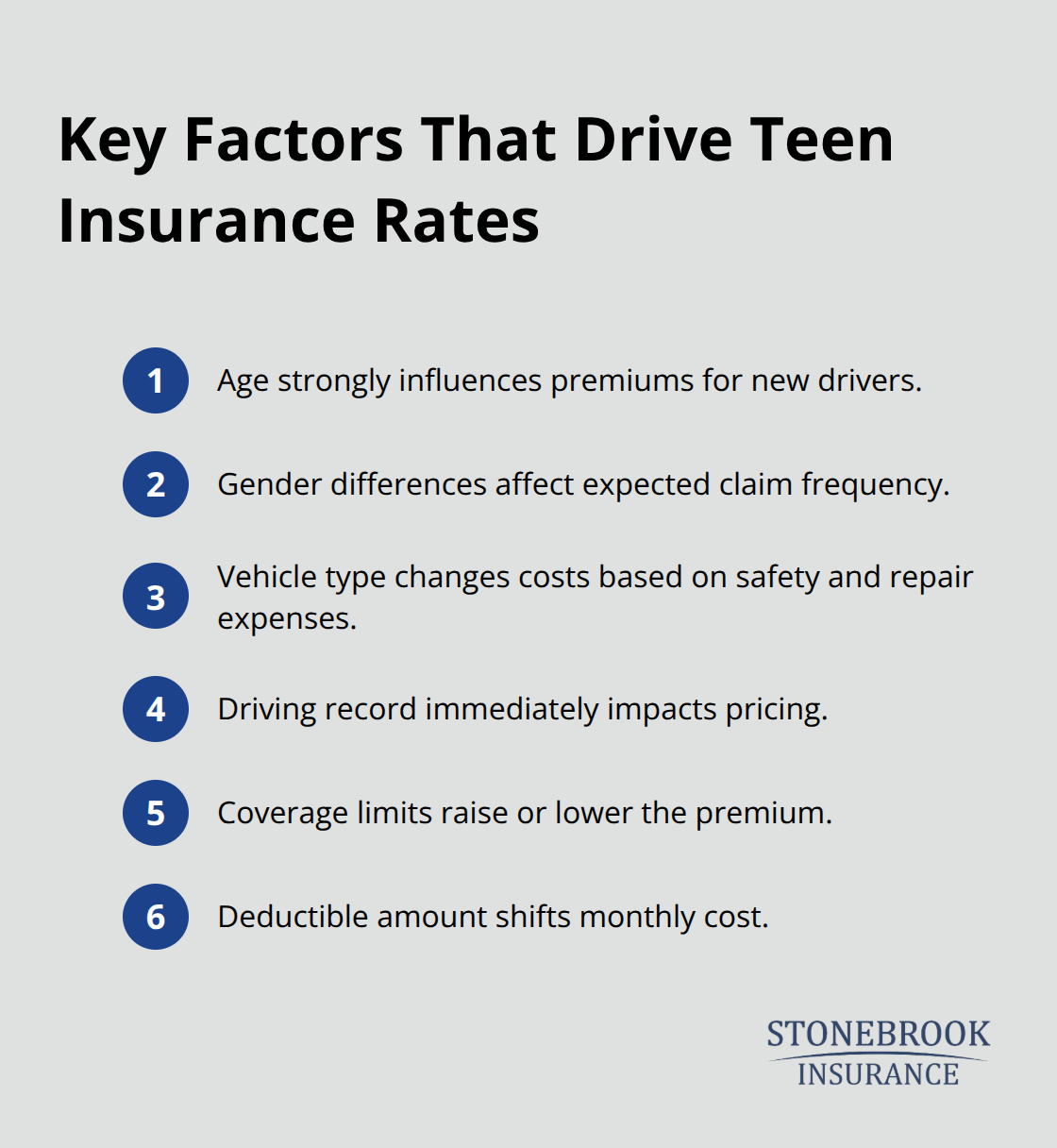
Insurance companies use specific factors to compare insurance companies online and calculate what you’ll pay for your teen’s coverage. Age is the primary driver-the younger the teen, the higher the rate. Gender also matters; male teens aged 16 to 19 consistently show higher claim frequencies than female teens the same age. The type of vehicle makes a significant difference too; sports cars and high-performance vehicles cost substantially more to insure than sedans or used family vehicles.
Your teen’s driving record history, though limited for new drivers, affects pricing immediately-even one accident or traffic violation bumps the rate up noticeably. The coverage limits and deductible you choose directly impact the premium. Selecting a $1,000 deductible instead of $250 can reduce your premium by 15 to 30 percent, depending on your insurer.
Location and Academic Performance
Where your teen drives and parks matters as well; urban areas with higher accident rates produce higher quotes than rural regions. Some insurers also consider the teen’s school grades, offering substantial discounts for maintaining a B average or better (this can save 10 to 15 percent on premiums at many carriers).
Understanding these pricing factors puts you in position to identify which discounts and coverage adjustments will actually lower your costs. The next section shows you which strategies work best.
Proven Tactics That Actually Cut Teen Insurance Costs
Good Student Discounts Work Fast
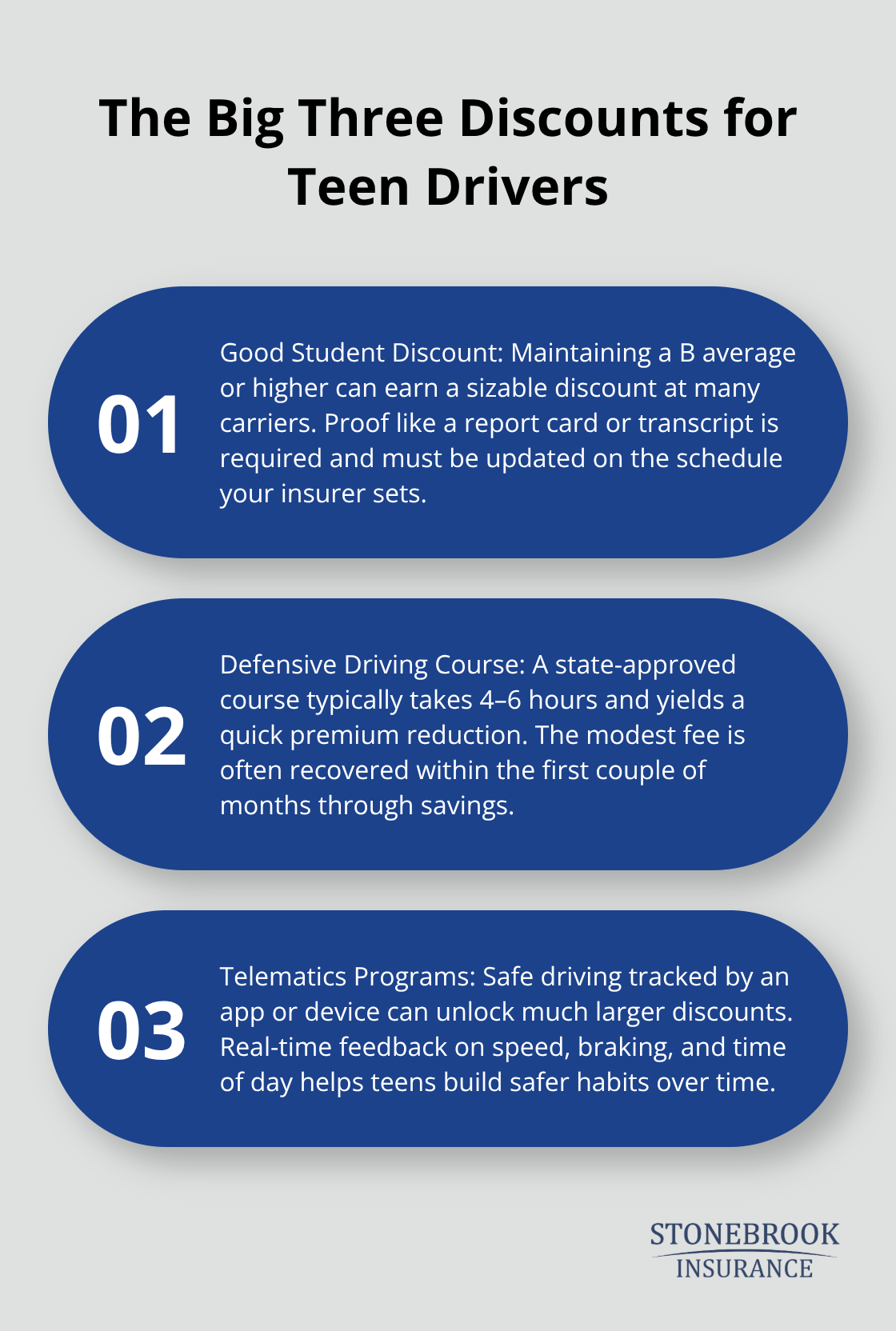
Good student discounts represent the fastest way to lower your premium without changing coverage or taking additional courses. Most major insurers offer discounts when your teen maintains a B average or higher. The National Association of Insurance Commissioners reports that approximately 60 percent of major insurers offer these academic discounts, making them one of the most accessible savings available. Your teen needs to provide a report card or transcript to qualify, and you’ll want to ask your insurer how often they require proof of continued grades. Some carriers update requirements annually while others check each semester. This discount typically applies for as long as your teen stays in school and maintains the grade requirement, so it’s worth monitoring closely.
Defensive Driving Courses Deliver Quick Savings
Defensive driving courses provide another straightforward reduction, typically saving 5 to 10 percent on premiums. The Defensive Driving Course offered through the National Safety Council or your state’s approved providers takes roughly four to six hours to complete and qualifies for discounts at virtually every major insurer. Some states allow online completion, which works well for busy families. You’ll pay between 20 and 50 dollars for the course, but the annual savings usually recover that cost within the first two months.
Telematics Programs Reward Safe Driving Habits
Telematics programs track your teen’s actual driving behavior through a smartphone app or installed device, offering much larger discounts ranging from 10 to 30 percent depending on how safely your teen drives. Companies like Allstate’s Drivewise, State Farm’s Drive Safe & Save, and Progressive’s Snapshot monitor speed, braking patterns, and time of day driving. Teens who drive cautiously during daylight hours and avoid rapid acceleration see the highest discounts. These programs create real incentives for safer habits, and your teen can watch their own data improve over time.
Adding Your Teen to Your Family Policy
Adding your teen to your existing family policy typically costs 50 to 100 dollars less monthly than purchasing a separate policy, according to Insurance Institute data. This approach also simplifies claims handling and billing, though you’ll want to confirm your policy limits are adequate for an additional driver. The trade-off is that any accidents or violations on your teen’s record affect your entire household premium, whereas a separate policy isolates the risk. Your local insurance agent can help you weigh which option makes sense for your family’s situation and budget.
How to Shop Smart for Teen Coverage
Compare Quotes Across Multiple Insurers
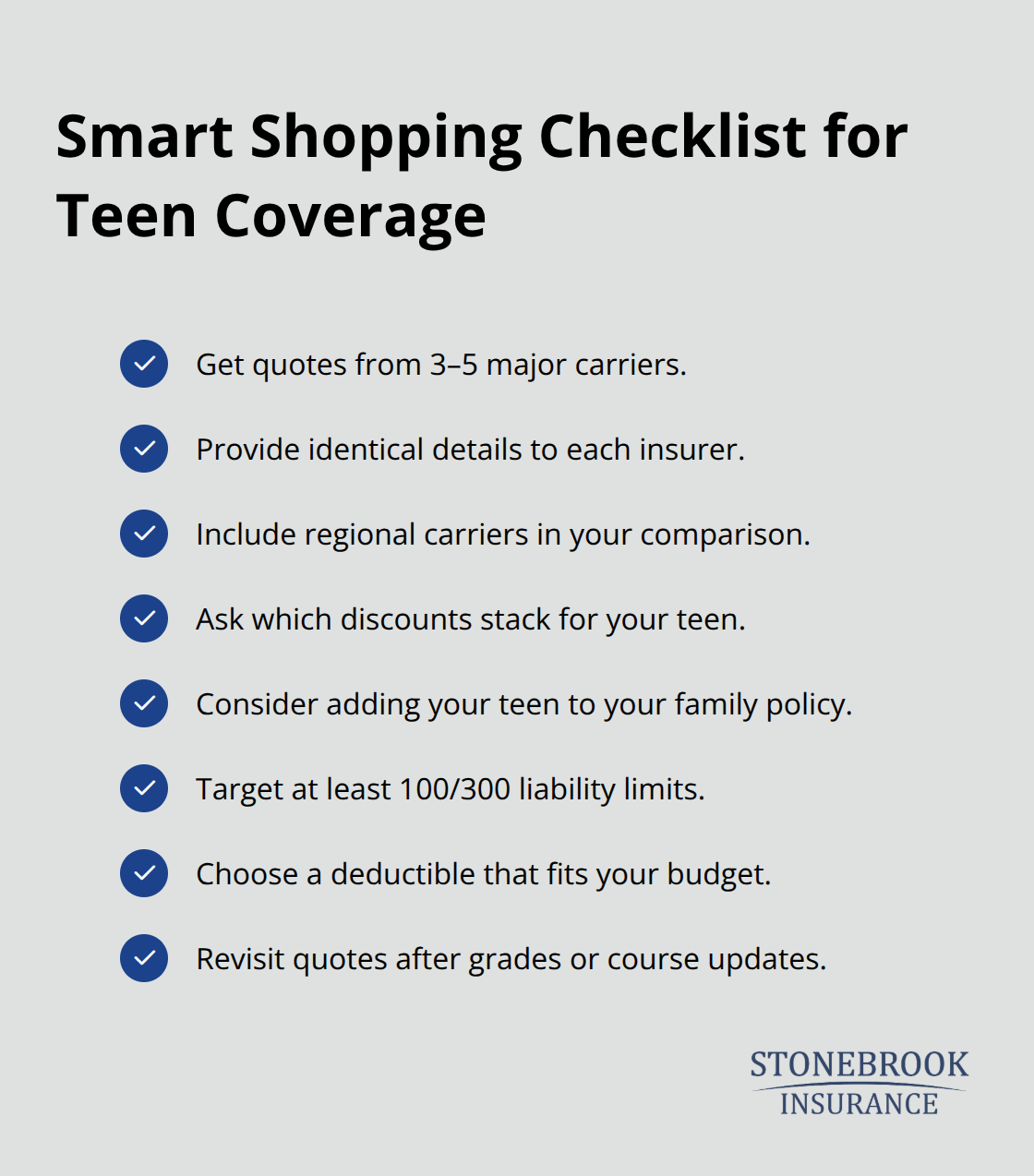
Comparing quotes across multiple insurers is non-negotiable if you want genuinely affordable teen driver insurance. Most families contact one or two companies and accept whatever rate they receive, but the difference between carriers can reach 40 to 50 percent for identical coverage on the same teen driver. State Farm might quote you 1,800 dollars annually while Geico quotes 1,200 dollars for the exact same policy limits and deductibles. Getting quotes from at least three to five major carriers takes roughly an hour online or by phone, and that hour translates directly to hundreds of dollars saved annually.
When you request a quote, provide identical information to each insurer-same vehicle, same coverage limits, same deductible-so the prices are truly comparable. Don’t skip smaller regional carriers either; they sometimes undercut national companies significantly for specific driver profiles. After collecting quotes, look for patterns in which discounts each company applies automatically and which ones require you to request them.
Identify Which Discounts Actually Apply
Some insurers bundle teen driver discounts more aggressively than others, so the final price after all discounts matters more than the base quote. Ask each carrier which discounts your teen qualifies for and whether they stack (many do, but some companies limit how many you can combine). The difference between carriers often comes down to how they weight academic discounts, defensive driving course savings, and telematics program incentives. One company might offer a 15 percent good student discount while another offers only 10 percent, and those percentage points add up across a year of premiums.
Choose Coverage Levels That Protect Your Budget
Coverage choices dramatically affect what you’ll pay, and the temptation to slash costs by choosing minimal coverage can backfire financially. A 250-dollar deductible costs roughly 15 to 30 percent more than a 1,000-dollar deductible, but that extra premium buys meaningful protection against surprise expenses when accidents happen. Liability limits deserve serious attention; state minimums typically range from 25,000 to 50,000 dollars per person, but a single serious accident can generate medical bills exceeding 100,000 dollars. Try liability limits of at least 100,000 per person and 300,000 per accident for families with teen drivers, since the consequences of underinsurance far outweigh the modest premium increase.
Evaluate Collision and Comprehensive Coverage
Collision and comprehensive coverage protect your vehicle’s value; if your teen drives a newer car worth more than 10,000 dollars, carrying both makes financial sense. If the vehicle is older and worth less than 5,000 dollars, dropping collision and keeping comprehensive often makes sense. A local insurance agent helps you navigate these decisions without guessing. An agent who understands your family’s situation can identify which coverage combinations actually protect you while recommending deductible levels that balance affordability with real protection.
Final Thoughts
Affordable teen driver insurance comes down to three core strategies: finding the discounts that apply to your specific situation, shopping multiple carriers to compare actual rates, and choosing coverage levels that protect your family without unnecessary expense. Good student discounts, defensive driving courses, and telematics programs can reduce your premium by 25 to 40 percent when combined effectively. Adding your teen to your existing policy typically costs less than a separate policy, and comparing quotes across at least three to five insurers reveals price differences that often exceed 500 dollars annually for identical coverage.
The real challenge isn’t finding cheap coverage-it’s finding affordable teen driver insurance that actually protects you when accidents happen. Dropping liability limits to state minimums or choosing a 250-dollar deductible to save 30 dollars monthly creates financial exposure that far outweighs the savings. A single serious accident can generate medical bills exceeding 100,000 dollars, making underinsurance a costly gamble.
Try liability limits of at least 100,000 per person and 300,000 per accident, then use discounts and smart shopping to bring that protected coverage into your budget. Contact Stonebrook Insurance to get personalized quotes that reflect all available savings for your teen driver. A local agent who understands your family’s needs takes the guesswork out of teen driver insurance and often finds savings you’d miss shopping alone.
The information provided in this blog is for general informational purposes only and does not constitute legal, financial, or insurance advice. Coverage options, terms, and availability may vary. Please consult with a licensed professional for advice specific to your situation.
Artificial intelligence may have been used to generate text and images in some blog articles.