

Standard homeowners and auto policies fall short when you own significant assets. High net worth insurance fills that gap with specialized coverage designed for people with substantial wealth and valuable possessions.
At Stonebrook Insurance, we work with clients who need protection that goes beyond what typical policies offer. This guide walks you through what sets high net worth coverage apart and how to find the right provider for your situation.
Why Standard Insurance Falls Short for Wealthy Individuals
Standard homeowners and auto policies cap coverage at limits designed for average properties and vehicles. A typical homeowners policy maxes out at $300,000 to $500,000 in dwelling coverage, while most auto policies top out around $100,000 per incident. These ceilings create immediate problems when you own a $2 million home, a $500,000 art collection, or multiple luxury vehicles.
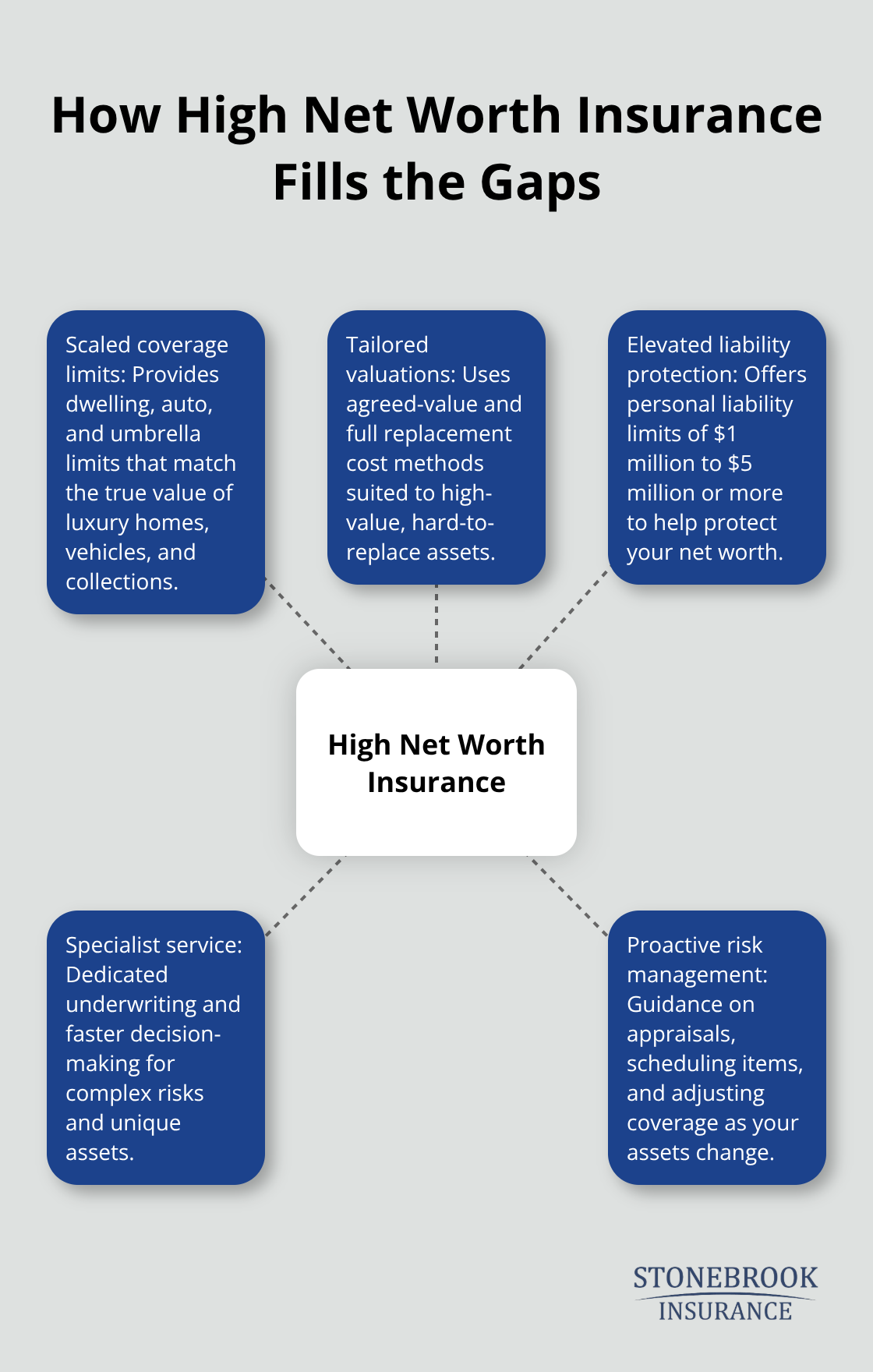
High net worth insurance eliminates these artificial caps and replaces them with coverage limits that scale to your actual asset values. Specialized carriers understand the complexity of protecting substantial assets and the liability risks that accompany significant wealth.
Coverage Limits That Reflect Your Assets
Standard policies leave dangerous gaps for anyone with substantial wealth. Your $2 million home receives only $500,000 in protection under a typical homeowners policy, leaving $1.5 million in exposure. A single luxury vehicle worth $300,000 sits unprotected beyond the $100,000 auto policy limit. High net worth insurance addresses this mismatch by offering coverage limits that scale to your actual asset values. Carriers specializing in high-value protection understand that replacement cost for luxury items differs fundamentally from standard property valuations. You access higher liability limits, typically ranging from $1 million to $5 million or more, which protects your personal assets if someone suffers injury on your property. Standard policies usually max out liability coverage at $300,000 to $500,000, leaving substantial exposure for someone with significant wealth.
Customized Protection for Complex Situations
High net worth policies address gaps that generic homeowners or auto insurance leaves wide open. Your coverage structure reflects your specific situation rather than a one-size-fits-all template. If you own rental properties, a vacation home, collectible vehicles, or fine art, each asset receives tailored attention. Carriers that focus on high net worth clients understand agreed-value coverage for collections and how to structure limits across multiple properties. They also recognize that your liability exposure differs from someone with average assets-your net worth itself creates additional risk that standard policies fail to address.
Service That Matches Your Needs
High net worth insurance comes with service levels that differ fundamentally from standard policies. You work with agents and underwriters who specialize in complex coverage scenarios rather than processing routine claims. Response times accelerate when issues arise, and decision-makers hold authority to address problems without layers of bureaucratic approval. You gain direct access to your agent instead of navigating call centers, and specialists answer questions about coverage gaps or asset changes without multiple transfers. This matters when you add a newly acquired property or adjust coverage after selling a significant asset.
Understanding these differences sets the foundation for identifying which assets actually need specialized coverage and which ones might already receive adequate protection through standard policies.
Assets That Actually Need High Net Worth Coverage
Luxury Homes and Secondary Properties
Luxury homes and secondary properties represent the most obvious candidates for specialized coverage, yet many high net worth individuals underestimate their exposure. A $3 million primary residence combined with a $1.5 million vacation home creates $4.5 million in real estate value that standard homeowners policies simply cannot protect adequately. Standard policies typically include replacement cost coverage up to their stated limits, but luxury homes often feature custom finishes, imported materials, and architectural details that cost far more to replace than standard construction. When you rebuild after a loss, you face the reality that standard contractors and materials fall short of your home’s original specifications.
Secondary properties present additional complications because insurers treat them differently than primary residences, often imposing stricter underwriting requirements and lower coverage limits. High net worth policies recognize these distinctions and structure coverage around replacement cost for luxury construction rather than the depreciated or averaged valuations that standard policies apply.
Expensive Vehicles and Collectible Items
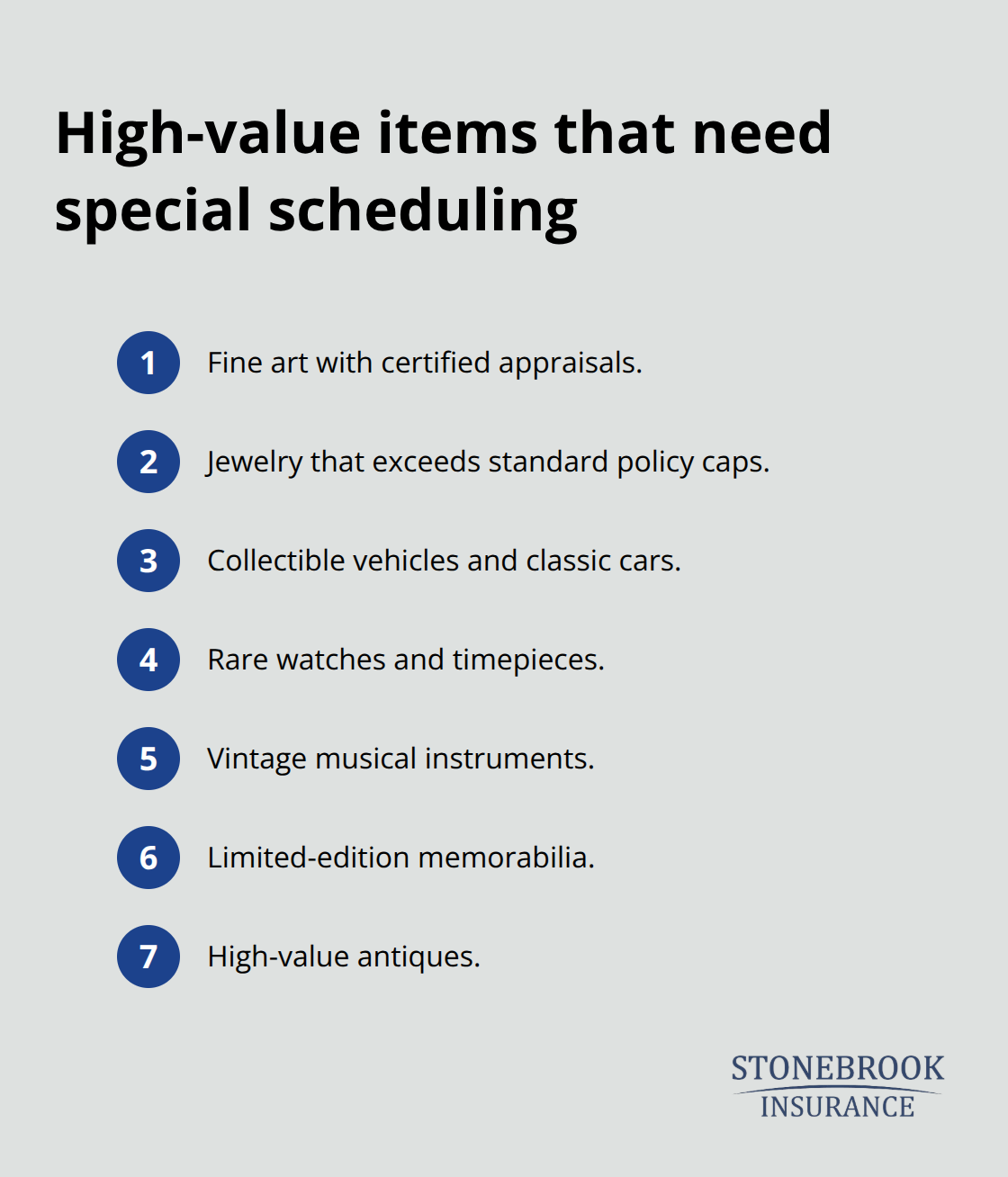
Expensive vehicles and collectible items demand equally specialized attention because their value extends beyond basic transportation or decoration. A $400,000 luxury vehicle or a collection of classic cars worth $2 million sits dangerously exposed under standard auto policies that max out around $100,000 per vehicle. Fine art collections, jewelry, and high-value antiques require agreed-value coverage rather than actual cash value calculations, which means an insurer acknowledges the item’s worth upfront rather than arguing depreciation after a loss occurs.
A painting worth $500,000 that an appraiser values at that amount receives $500,000 in coverage under agreed-value terms, eliminating disputes about market value at claim time. Standard homeowners policies typically cap jewelry coverage at $1,500 to $2,500 total, creating a massive gap for anyone with significant pieces. Collectible items like rare watches, vintage instruments, or limited-edition memorabilia fall outside standard coverage entirely unless you specifically schedule them.
Why Individual Attention Matters
These assets need individual attention and documentation rather than generic protection. High net worth policies treat each valuable item as a distinct risk requiring proper valuation and tailored limits. This approach protects you from coverage gaps that emerge when standard policies apply one-size-fits-all formulas to extraordinary assets. The difference between agreed-value and actual cash value coverage can mean hundreds of thousands of dollars in your pocket when a claim occurs.
Understanding which assets fall into this specialized category helps you identify exactly what protection you need. The next step involves evaluating your total asset portfolio and determining which items require high net worth coverage versus which ones standard policies adequately protect.
Selecting a High Net Worth Insurance Carrier
Finding the right high net worth insurance provider requires moving beyond price comparison and examining how well a carrier understands your specific asset portfolio. Start by documenting your complete asset inventory with current valuations. List your primary residence and any secondary properties with their replacement costs, not purchase prices. Include vehicle values for all luxury and collectible cars, fine art appraisals from certified professionals, jewelry documentation with receipts or appraisals, and any other items exceeding $10,000 in value. This inventory becomes your roadmap when evaluating carriers.
Many high net worth individuals assume their existing homeowners or auto insurer can simply raise coverage limits, but specialized carriers structure policies fundamentally differently. They use agreed-value coverage for collectibles, adjust liability limits based on net worth rather than property value, and account for exposures standard carriers ignore entirely. When you contact potential carriers, ask specifically how they handle agreed-value coverage, what their maximum liability limits extend to, and whether they schedule individual items or use blanket coverage approaches. A carrier that asks detailed questions about your assets during the underwriting process signals they take customization seriously. Those offering quick quotes without understanding your situation typically lack the expertise to protect you adequately.
Comparing Carriers on Actual Experience
Request references from carriers who have handled similar asset portfolios to yours. Ask whether they’ve insured clients with comparable real estate holdings, vehicle collections, or art collections. Carriers with genuine high net worth expertise can articulate specific claims they’ve managed involving luxury properties or collectible items. When you receive quotes, the premium differences often reveal which carriers understand your situation. Unusually low quotes frequently indicate a carrier has underestimated your exposure or failed to properly schedule valuable items.
Shop multiple major carriers to identify which insurers price fairly for your specific asset mix rather than applying generic formulas. Ask any carrier how they handle policy adjustments when you acquire new assets or sell existing ones. Quality carriers process these changes quickly without requiring full policy rewrites.
Claims Response and Resolution Speed
During claims, response time matters enormously. Standard carriers route high-value claims through standard adjusters, while specialized carriers dispatch adjusters experienced with luxury properties and collectibles. Request information about average claim resolution times for high-value losses. Carriers handling high net worth clients typically resolve significant claims within 30 to 60 days rather than the 90-plus days standard policies often require.
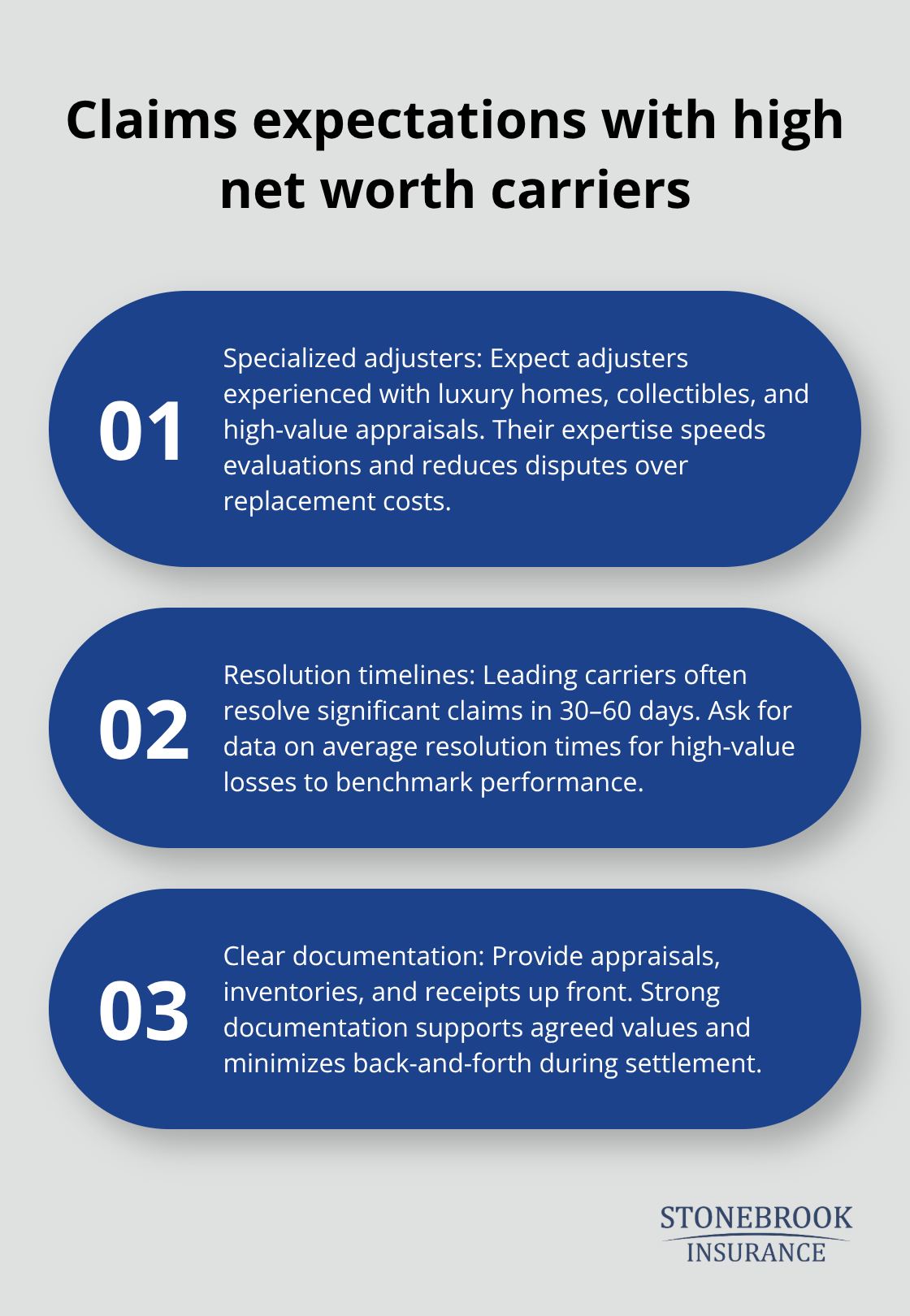
The adjuster assigned to your claim should possess specific experience with luxury asset valuations and replacement costs. Ask potential carriers whether their adjusters hold certifications in high-value property assessment or have handled claims exceeding $500,000. A carrier’s willingness to answer these questions directly indicates confidence in their claims process.
Underwriting Standards and Flexibility
Specialized carriers apply different underwriting standards than standard insurers. They may require professional appraisals for items exceeding certain thresholds (typically $5,000 to $10,000), but this protects you by establishing agreed values upfront. Ask carriers about their appraisal requirements and whether they maintain relationships with certified appraisers in your area. Some carriers accept appraisals you’ve already obtained, while others insist on their own appraisers, which affects both timeline and cost.
Flexibility matters when your situation changes. A carrier that accommodates mid-year policy adjustments without penalties or extensive paperwork serves you better than one requiring annual renewals for any modifications. Ask about their process for adding newly acquired assets or removing items you’ve sold.
Final Thoughts
High net worth insurance protects what standard policies leave exposed. You’ve seen how specialized coverage addresses the gaps that emerge when you own significant assets, from luxury homes and collectible vehicles to fine art and jewelry. The difference between adequate protection and dangerous exposure often comes down to working with a carrier that understands your specific situation rather than applying generic formulas to extraordinary assets.
Your next step involves taking inventory of your complete asset portfolio with current valuations. Document your properties, vehicles, collections, and valuables so you have concrete numbers when contacting carriers. This preparation accelerates the underwriting process and helps you identify which items truly need specialized attention versus which ones standard policies adequately cover. When evaluating carriers, prioritize those with genuine high net worth experience over those offering quick quotes without asking detailed questions about your assets.
Request references from clients with comparable portfolios, ask about their claims process and average resolution times, and verify that their adjusters hold relevant certifications for high-value property assessment. The premium differences between carriers often reveal which ones understand your exposure and which ones have underestimated it. Contact Stonebrook Insurance to discuss your high net worth insurance needs and secure tailored protection for everything you’ve built.
The information provided in this blog is for general informational purposes only and does not constitute legal, financial, or insurance advice. Coverage options, terms, and availability may vary. Please consult with a licensed professional for advice specific to your situation.
Artificial intelligence may have been used to generate text and images in some blog articles.