

Adding a teen driver to your family’s auto insurance policy often means a significant jump in premiums. We at Stonebrook Insurance know that teen driver insurance rates can feel overwhelming for parents trying to balance protection with affordability.
The good news is that several factors affecting your costs are within your control. This guide walks you through what drives rates up, proven ways to bring them down, and mistakes to avoid.
What Really Drives Teen Insurance Costs
Age matters far more than most parents realize. According to The Zebra’s data, a 16-year-old pays around $5,744 per year for auto insurance, but that drops to $3,082 by age 19 and further to $2,780 at age 20. This sharp decline reflects one simple fact: experience reduces risk.
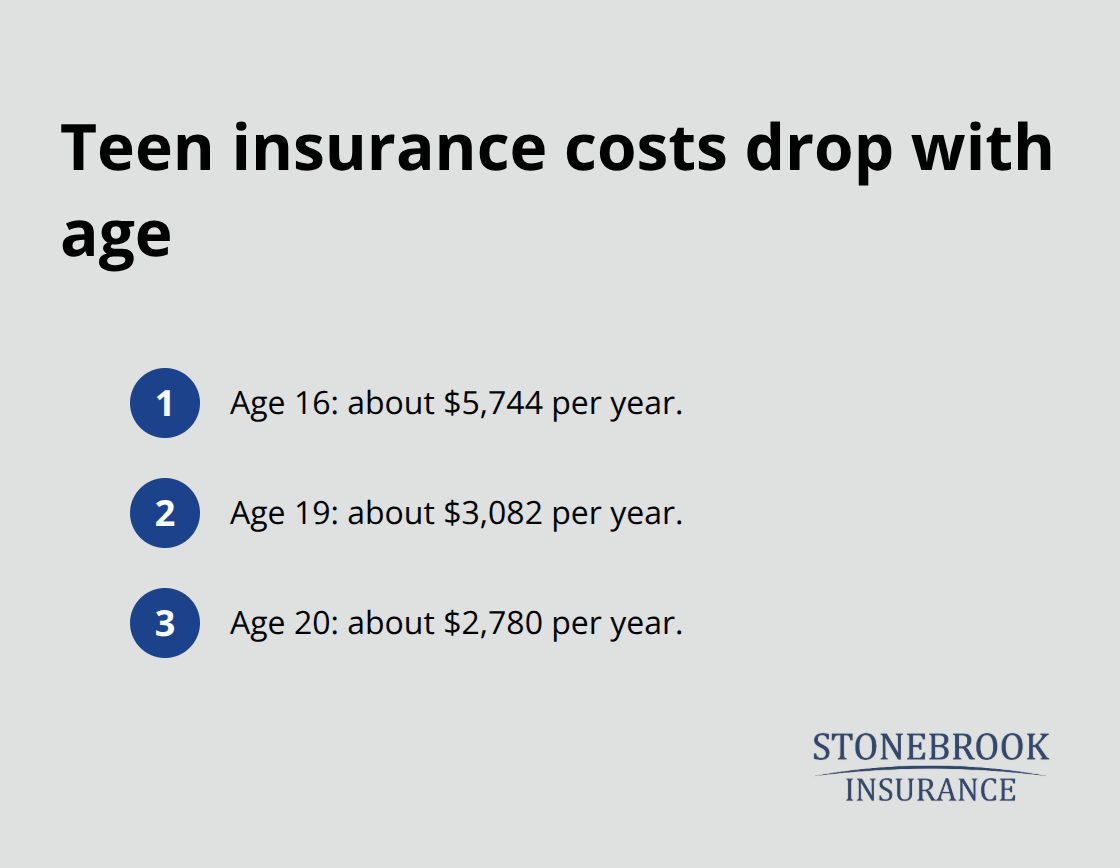
Insurers know that teen drivers aged 16-19 are nearly three times more likely to be involved in fatal crashes than drivers 20 and older. The difference between a 16-year-old and an 18-year-old on your policy is substantial-roughly $1,473 annually. Waiting even a year or two before adding a teen to your policy can meaningfully reduce what you pay.
Driving Record Sets Your Baseline Rate
Your teen’s driving record is the second-biggest factor insurers examine. A single speeding ticket of 16-20 mph over the limit pushes six-month premiums to around $1,375-$1,396, according to The Zebra. Texting while driving sits in the same range. An at-fault accident jumps premiums to approximately $1,600 for six months. A DUI completely changes the equation, pushing costs to roughly $2,036 for six months. One bad decision can double your insurance costs for years. This is why defensive driving courses matter so much-they show insurers your teen takes safety seriously and often qualify for discounts around $283 on average.
Vehicle Type and Safety Features Control Repair Costs
The car your teen drives directly affects your premium because insurers calculate the cost to repair or replace it. A safe, reliable vehicle with high safety ratings and low repair costs costs significantly less to insure than a luxury or sports car. Older vehicles typically cost less than newer ones because repair expenses are lower. A 7-8 year old sedan will have dramatically lower premiums than a brand-new sports car. Choosing the right vehicle can save hundreds annually-this is one area where you have immediate control. Additionally, vehicles with strong safety features and anti-theft technology qualify for discounts that compound over time. High-performance vehicles should be avoided entirely if you’re trying to manage costs.
Good Grades Qualify for Real Savings
A teen with a GPA of 3.0 or higher typically qualifies for a good student discount averaging around $283 per year. This is one of the easiest discounts to earn because it requires no special enrollment or device installation. Some insurers offer this discount automatically once you provide proof of grades, while others require you to request it. The discount usually applies as long as your teen maintains the required GPA, making it a long-term benefit if your teen stays focused on academics. Insurers reward responsible behavior beyond just driving, recognizing that discipline in one area often translates to discipline behind the wheel. Understanding these four factors positions you to make smarter decisions about coverage-and the next section shows you exactly how to translate this knowledge into lower premiums.
How to Lower Your Teen’s Insurance Costs
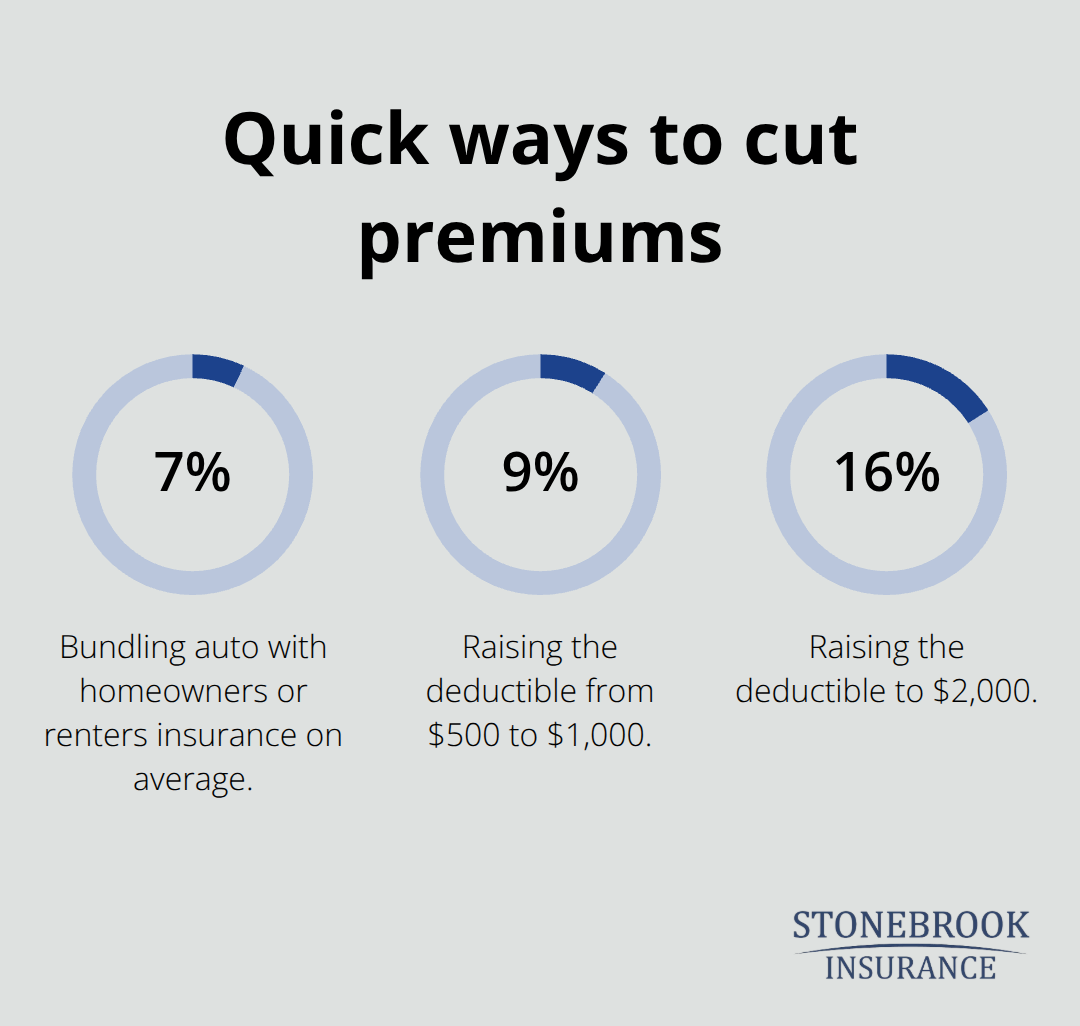
The four biggest levers for reducing teen driver premiums are bundling, defensive driving, coverage adjustments, and telematics monitoring. Most parents focus on only one or two of these strategies, which means they’re leaving hundreds of dollars on the table each year. The data is clear: combining multiple approaches yields far better results than relying on a single discount. According to The Zebra, bundling auto with homeowners or renters insurance saves an average of 7%, with potential savings up to 17%. Adding a defensive driving course discount of roughly $283, increasing your deductible strategically, and installing a telematics device that saves about $172 on average means you could realistically cut $900 or more from annual premiums. The key is understanding which strategies work best for your specific situation and stacking them together.
Bundling and Deductible Adjustments Deliver Immediate Savings
Bundling your teen’s auto policy with homeowners or renters insurance typically yields around 10% savings on homeowners bundling and 5.3% on renters bundling. This isn’t theoretical-it’s how major carriers reward loyalty. If your household doesn’t currently bundle, switching to a single provider for both auto and home coverage delivers significant savings. Separately, raising your deductible from $500 to $1,000 cuts roughly 9% from annual premiums, while jumping to $2,000 saves about 16%. For a 16-year-old paying around $5,744 annually, a $2,000 deductible could translate to roughly $919 in savings. The trade-off is real: you’ll pay more out-of-pocket after an accident. Only raise deductibles if you have emergency savings to cover that amount.
Paying your annual premium upfront rather than monthly also saves about 4.9%-roughly $210 on a $4,271 premium. These adjustments require no special enrollment, work immediately, and compound when combined with other discounts.
Defensive Driving Courses Build Safer Drivers
A defensive driving course demonstrates your teen takes road safety seriously and qualifies for discounts averaging $283. More importantly, completing such a course often makes your teen a safer driver, which reduces accident risk over time. The discount itself matters less than the behavioral change it represents. Your teen learns to anticipate hazards, manage speed in different conditions, and recognize distractions before they cause crashes. Insurers recognize this shift and reward it accordingly. Unlike a one-time discount that expires, the skills your teen gains from defensive driving persist throughout their driving life. This is why insurers view these courses as investments in long-term safety rather than temporary cost reductions.
Telematics Programs Tie Savings to Real Driving Performance
Telematics devices like Progressive’s Snapshot program monitor actual driving behavior and reward safe habits with savings around $172 on average, though some states see higher reductions like Connecticut’s 8%. These programs track speed, braking patterns, and time of day driving, giving your teen real feedback on dangerous habits. Unlike a one-time discount, telematics savings grow as your teen demonstrates consistent safe driving. Insurers increasingly view these programs as better predictors of future claims than credit scores or demographic factors. Installing a device takes minutes, costs nothing, and directly ties your premium reduction to your teen’s actual driving performance rather than assumptions about their age group. Your teen sees the connection between their choices and your savings, which reinforces safe habits week after week.
Shopping Multiple Carriers Reveals Hidden Savings
The difference between carriers matters far more than most parents realize. According to The Zebra, USAA averages around $114 per month for teen drivers, while Allstate averages $201 per month-a difference of $1,044 annually for identical coverage. Nationwide, GEICO, American Family, and State Farm all fall between these extremes, each offering different discounts and rate structures. Your teen’s profile (age, driving record, vehicle type, location) matches better with some carriers than others. Shopping quotes from at least three major carriers takes roughly 30 minutes and often reveals $500 to $1,000 in annual savings. An independent insurance agent can shop multiple carriers simultaneously, saving you time and helping you compare apples to apples. This step alone frequently outweighs any single discount you could earn.
Common Mistakes Parents Make When Insuring Teen Drivers
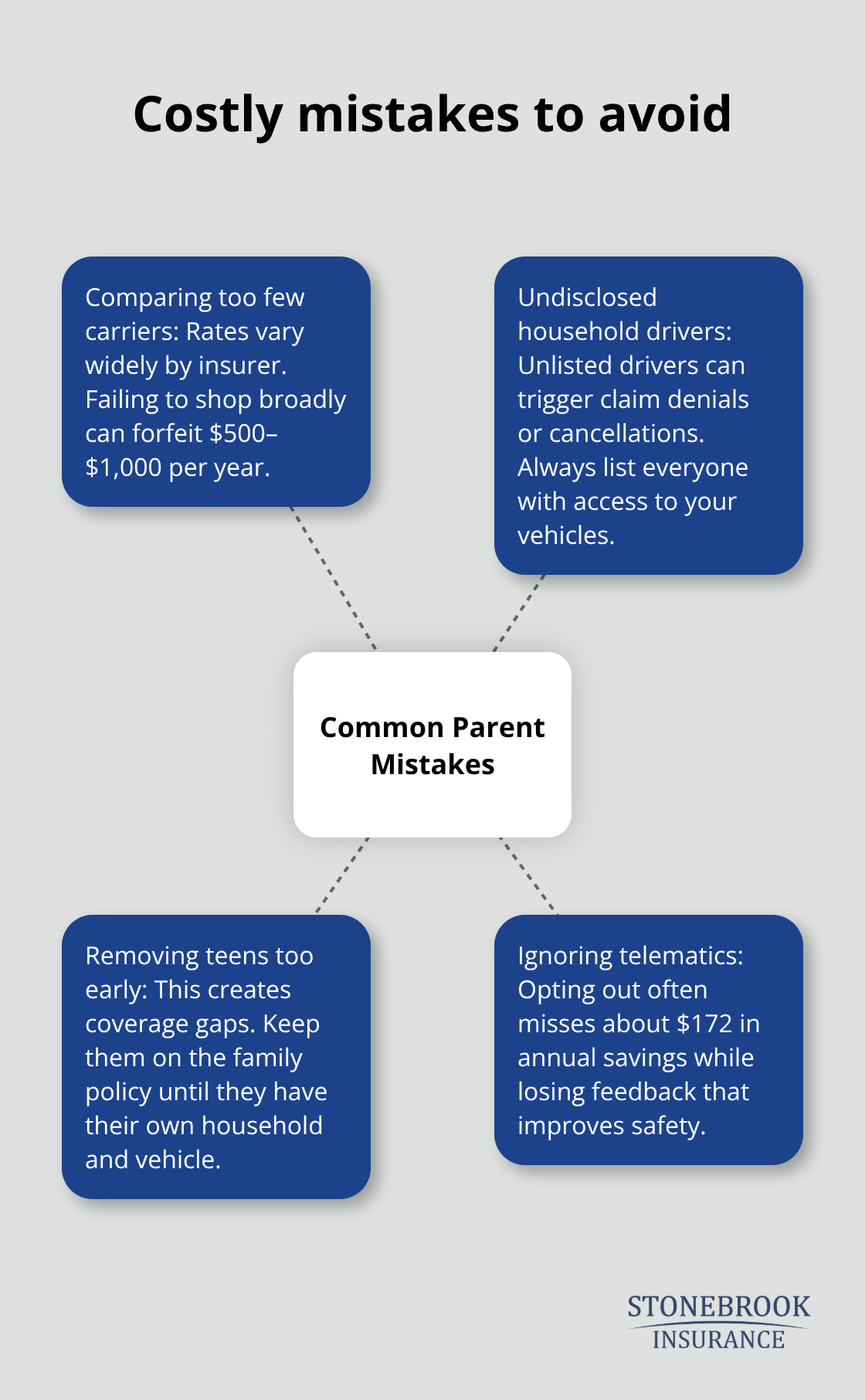
Most parents underestimate how much their teen insurance choices cost them over time. The difference between a parent who shops one carrier and a parent who compares three carriers is roughly $1,044 annually, according to The Zebra data showing USAA at $114 monthly versus Allstate at $201 monthly for identical teen coverage. That’s over $10,000 wasted across ten years. Yet the biggest mistake isn’t just failing to shop around-it’s the combination of mistakes that compounds. Parents often skip comparing carriers, hide household drivers from their insurer, remove teens from policies prematurely, and ignore telematics programs entirely. Each mistake independently costs money. Together, they can easily add $2,000 or more to annual premiums.
Comparing Only One or Two Carriers Leaves Thousands on the Table
Shopping multiple carriers frequently reveals $500 to $1,000 in annual savings-that’s $5,000 to $10,000 over a decade. Yet most parents get a quote from their current provider and stop. They assume all insurers charge roughly the same for teen drivers, which is completely false. USAA, Nationwide, GEICO, American Family, State Farm, Farmers, Progressive, and Allstate all price teen drivers differently based on their underwriting criteria and available discounts. Your teen’s specific profile-age, location, vehicle type, driving record-aligns better with some carriers than others. One insurer might heavily reward good student discounts while another emphasizes telematics savings. An independent insurance agent can run quotes across multiple carriers simultaneously without you filling out separate applications, then show you exactly which combination of discounts each carrier offers. This step alone frequently outweighs any single discount you could earn through other strategies.
Undisclosed Household Drivers Trigger Policy Cancellations and Rate Increases
Insurance companies ask about all household drivers for a reason: they calculate risk based on everyone with access to the vehicles on your policy. If your spouse occasionally drives the insured vehicle but isn’t listed, or if another teen in your household drives without being added, you create a coverage gap. Insurers discover these omissions when processing claims after accidents, and the result is denial of coverage or policy cancellation-leaving you financially exposed. Even without an accident, many insurers now conduct periodic reviews and will increase your rate significantly if they discover unlisted drivers. The cost of adding another driver is far less than the cost of having a claim denied or your policy cancelled. Transparency with your insurer isn’t just ethical; it’s the only way to guarantee coverage actually protects you when you need it.
Removing Teens Too Early Leaves Them Unprotected
Parents sometimes remove teen drivers from the family policy once they turn 18 or move away for college, assuming the teen no longer needs coverage. This creates serious gaps. If your 18-year-old drives occasionally when home from college, they’re uninsured. If they borrow a friend’s car, they have no coverage. The actual strategy is to keep your teen on the family policy as long as they live in your household or drive your vehicles regularly, then explore discounts like the student-away-from-home discount, which saves roughly 15-30% annually depending on the insurer. That discount could save $640 to $1,280 per year compared to buying a standalone policy or leaving them uninsured. Removal should happen only when your teen establishes their own household and buys their own vehicle.
Ignoring Telematics Means Missing $172 in Annual Savings
Telematics programs like Progressive’s Snapshot seem optional because insurers don’t require them. They’re actually one of the most effective ways to reduce premiums while teaching your teen safe driving habits. These programs save an average of $172 annually, with some states like Connecticut seeing 8% reductions. The savings come directly from your teen’s actual driving performance, not assumptions about their age group. Your teen sees real-time feedback on speeding, hard braking, and nighttime driving, which reinforces safe habits week after week. Parents who skip telematics because they think it’s invasive or unnecessary are leaving money on the table while missing a tool that genuinely improves their teen’s driving safety.
Final Thoughts
Teen driver insurance rates depend on factors you control and factors you don’t. Age and driving experience set your baseline, but your vehicle choice, your teen’s grades, and their driving record determine whether you pay $3,000 or $6,000 annually. A parent who bundles policies, raises deductibles strategically, installs telematics, and shops three carriers instead of one saves roughly $1,500 to $2,000 per year compared to a parent who does none of these things.
Gather quotes from at least three major carriers this week, as your teen’s specific profile aligns better with some insurers than others. While you compare quotes, verify which discounts your teen qualifies for: good student discounts, defensive driving course savings, and telematics programs. Then adjust your coverage strategically by raising your deductible and bundling with homeowners or renters insurance to deliver immediate savings without sacrificing protection.
An independent agent simplifies this process significantly by shopping multiple carriers simultaneously and identifying discounts you’d miss on your own. We at Stonebrook Insurance have spent more than 30 years helping Texas families find affordable coverage that actually protects them, and our team shops major carriers to match your teen’s profile with the right insurer and discount combination. Contact Stonebrook Insurance to discuss your teen driver insurance rates with an agent who understands your situation and your budget.
The information provided in this blog is for general informational purposes only and does not constitute legal, financial, or insurance advice. Coverage options, terms, and availability may vary. Please consult with a licensed professional for advice specific to your situation.
Artificial intelligence may have been used to generate text and images in some blog articles.