

Getting Texas homeowners insurance quotes shouldn’t feel overwhelming. Most homeowners either accept the first quote they receive or spend hours comparing policies without understanding what they’re actually looking at.
At Stonebrook Insurance, we’ve helped hundreds of Texas homeowners find better rates by knowing exactly what to look for. The right approach can save you hundreds of dollars annually while getting the coverage your home actually needs.
What Drives Your Texas Homeowners Insurance Quote
Location Creates the Biggest Premium Differences
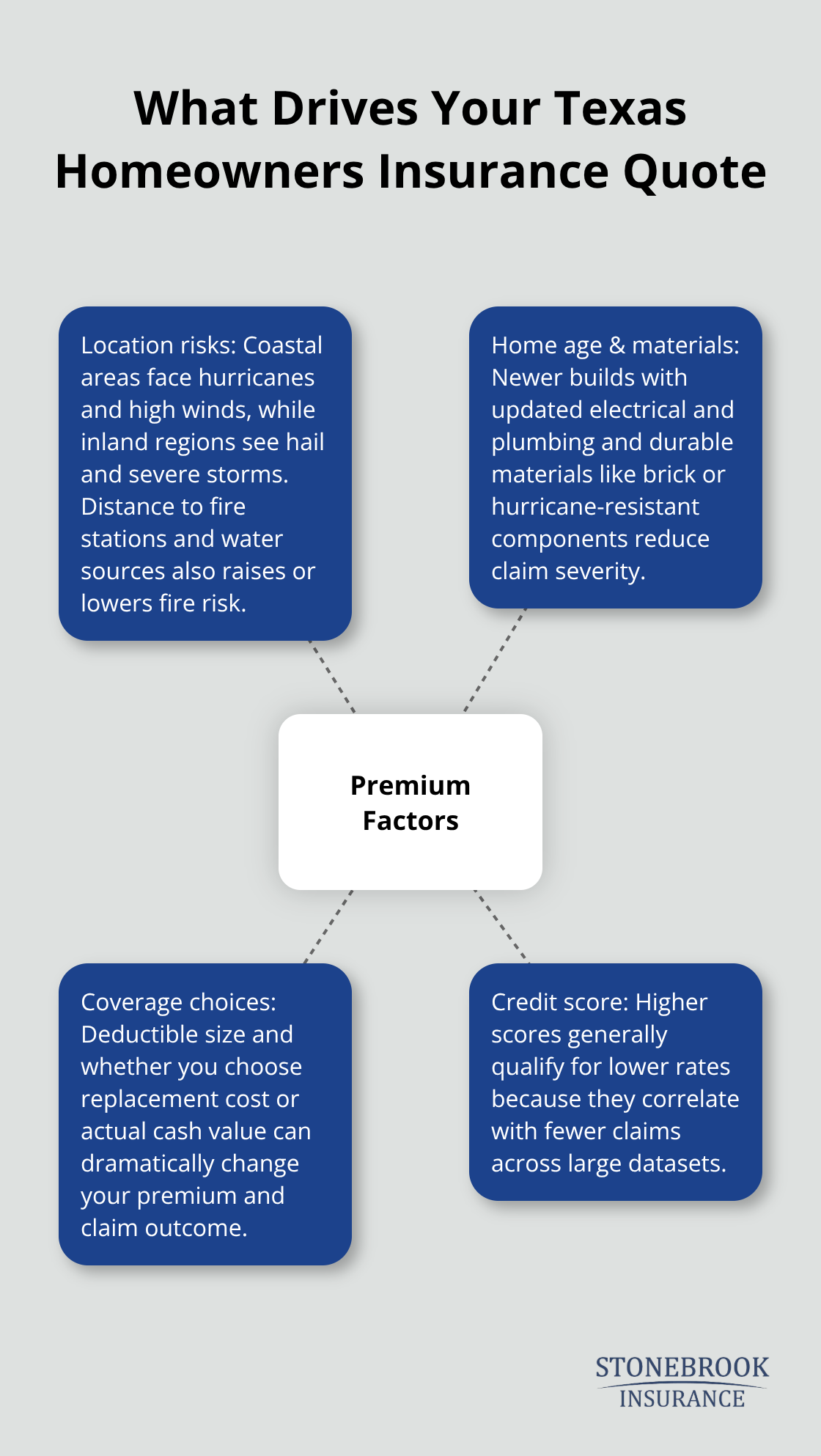
Your insurance quote isn’t random. Insurance companies calculate premiums based on measurable risk factors, and understanding these factors helps you see why your quote looks the way it does. Location matters significantly because Texas experiences distinct weather patterns and crime rates by region. Coastal areas face higher hurricane and wind damage risk, which explains why homeowners in Galveston pay substantially more than those in Austin. Inland regions like the areas around Comanche deal with hail and severe thunderstorms, creating their own premium pressures. Your home’s distance from fire stations and water sources also affects your rate-homes farther from these amenities face higher fire risk premiums.
Home Age and Construction Materials Impact Your Rate
Your home’s age and construction materials directly influence your premium. A brick home built with modern hurricane-resistant materials costs less to insure than an older wood-frame house, simply because the risk of total loss differs. Insurance companies examine these structural details carefully because they predict claim severity. Newer homes with updated electrical systems and plumbing typically qualify for lower rates than older properties with outdated infrastructure.
Your Coverage Choices Create the Biggest Variance
Your coverage selections create the largest differences between quotes. A homeowner selecting a $1,000 deductible pays more in annual premiums than someone selecting a $2,500 deductible, but that math flips during claims. Lower deductibles mean higher out-of-pocket costs when disaster strikes, while higher deductibles reduce premiums but increase your financial exposure. Replacement cost coverage versus actual cash value changes your quote dramatically too. Replacement cost reimburses you for rebuilding at current prices, while actual cash value subtracts depreciation. Most Texas homeowners should lean toward replacement cost for adequate protection.
Credit Score and Financial History Matter More Than You Think
Credit score impacts your quote more than many homeowners realize. According to the National Association of Insurance Commissioners, insurers use credit-based insurance scores because they predict the likelihood of an insurance claim. A homeowner with a 750 credit score typically qualifies for rates 20 to 30 percent lower than someone with a 600 score. This gap reflects real differences in risk profiles that insurers track across millions of policies.
These factors work together to shape your final quote, but they’re only part of the picture. The way you compare quotes matters just as much as understanding what drives them.
How to Actually Compare Insurance Quotes
Request Identical Coverage Across All Quotes
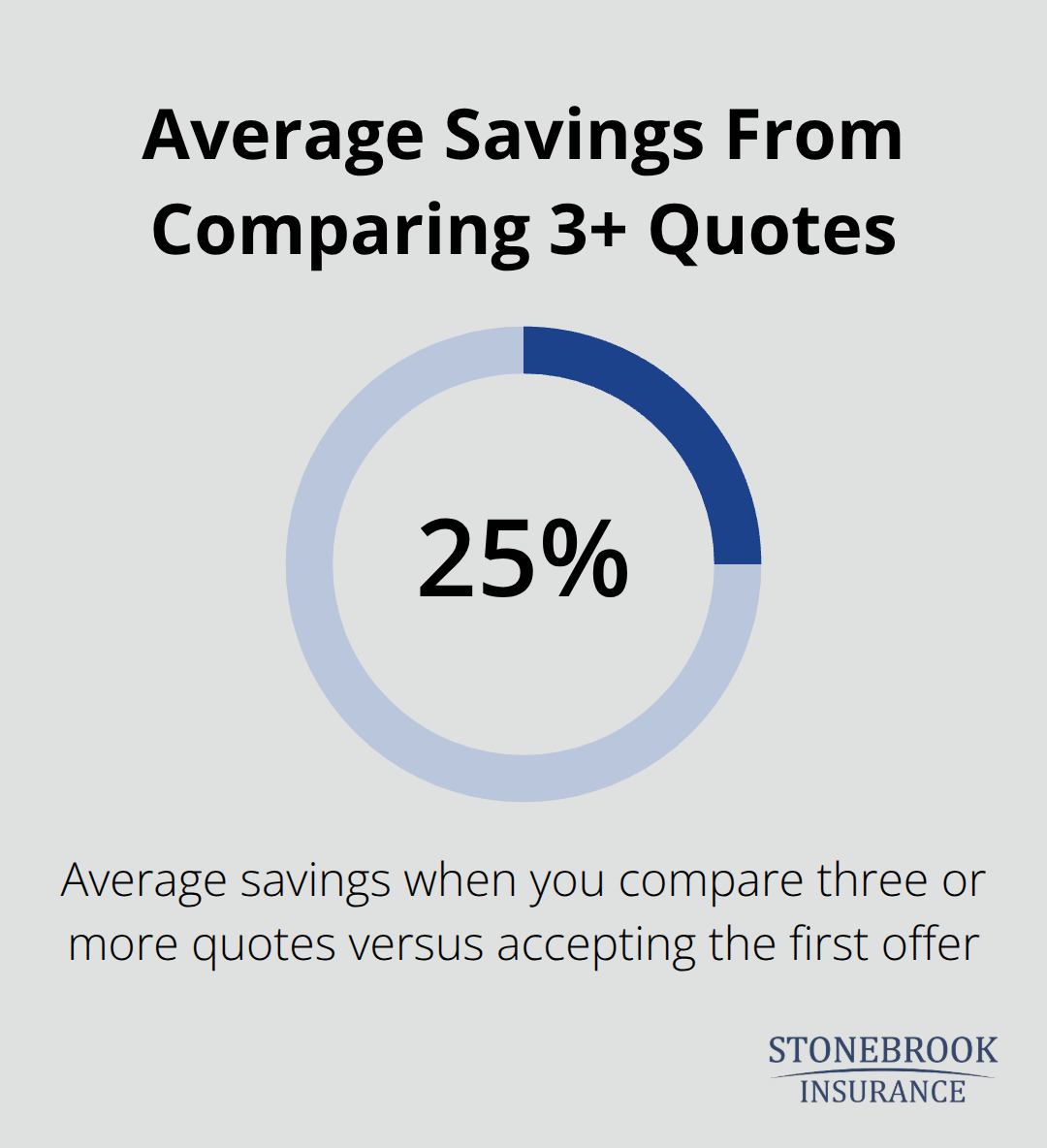
Comparing homeowners insurance quotes requires a specific strategy that most Texas homeowners skip. You need identical coverage terms across every quote you gather, or you’re comparing apples to oranges. Request quotes for the exact same dwelling replacement cost, deductible amount, and coverage limits from at least three different carriers. Many homeowners request quotes with different deductibles or coverage options, then wonder why the prices vary so dramatically. When you standardize these variables, price differences become meaningful rather than confusing. Most carriers provide quotes online within minutes, so there’s no reason to settle for just one option. Homeowners who compare three or more quotes save an average of 25 percent on annual premiums compared to those accepting the first offer. That’s real money in your pocket, potentially hundreds of dollars annually.
Read the Declarations Page Line by Line
Once you have multiple quotes with identical coverage, the real work begins. Read the declarations page carefully because this document shows exactly what you’re paying for and what the insurer will cover. Some carriers include water backup coverage in their base policy while others charge extra. Some offer wind and hail deductibles that differ, and others include replacement cost for certain items while competitors don’t. Calculate your true out-of-pocket maximum by adding the annual premium to the deductible amount, then multiply by three years to see the realistic cost picture. A quote with a lower premium but a higher deductible might cost you more money when you factor in actual claim scenarios.
Account for Discounts Before Making Your Final Decision
Texas homeowners also need to examine available discounts within each quote because some carriers offer reductions for bundling home and auto policies, installing monitored security systems, or maintaining excellent credit scores. These discounts shift dramatically between carriers, so one company’s cheapest base rate might become more expensive after you apply your specific discounts. The real comparison happens after you subtract all applicable discounts from each quote. Shopping multiple carriers manually takes considerable time, which is why many Texas homeowners benefit from working with an agent who handles this comparison work. An agent can pull quotes from several major carriers simultaneously, apply your specific discounts, and present the actual costs side by side-saving you hours while revealing options you might have missed on your own.
Common Discounts Texas Homeowners Miss Out On
Bundle Home and Auto Insurance for Immediate Savings
Most Texas homeowners accept their insurance quote without ever asking about discounts, which means they’re paying hundreds of dollars more than necessary. The average Texas homeowner qualifies for three to five discounts they never claim, according to data from the National Association of Insurance Commissioners. The problem isn’t that discounts don’t exist; it’s that carriers bury them in their fine print, and homeowners don’t know what to ask for.

Bundling your home and auto insurance with the same carrier typically saves 15 to 25 percent on your combined premiums, yet fewer than 40 percent of Texas homeowners take advantage of this option. If you’re carrying separate policies, you’re leaving significant savings on the table. This single discount often reduces your annual costs by several hundred dollars without requiring any changes to your coverage or lifestyle.
Install Security and Safety Devices to Lower Premiums
A monitored security system reduces your annual homeowners premium by 5–20 percent depending on the carrier, because these systems demonstrably reduce theft and property damage claims. A professionally monitored system costs between $25 and $50 monthly, but if it saves you even $20 monthly on insurance, the system essentially pays for itself while protecting your home.
Texas carriers also offer additional reductions for completing a home safety inspection, installing storm shutters in hurricane-prone areas, and maintaining your roof in good condition. These improvements signal to insurers that you take property maintenance seriously, which correlates with fewer claims. The cumulative effect of stacking three or four discounts can reduce your final premium by 35 to 50 percent compared to the base rate.
Maintain a Good Credit Score to Access Preferred Pricing
Your credit score directly influences which discount tiers you qualify for within each carrier’s pricing structure. Homeowners with excellent credit scores access preferred pricing that can be 20 to 30 percent lower than standard rates, according to the National Association of Insurance Commissioners. This reflects risk prediction based on decades of claims data showing that credit-responsible individuals file fewer claims overall.
Maintaining a 720 credit score or higher positions you in the best discount category across virtually every major carrier. This is why comparing quotes after applying your actual discounts matters far more than comparing raw premiums-the carrier with the lowest starting price often isn’t the cheapest option once discounts are applied. Your specific discount eligibility transforms which quote represents the true best value for your situation.
Final Thoughts
Finding the best value in Texas homeowners insurance quotes requires three concrete actions: comparing identical coverage across multiple carriers, understanding what each quote includes, and claiming every discount you qualify for. Most Texas homeowners leave hundreds of dollars on the table annually because they skip this process or rush through it without strategy. The difference between accepting the first quote and shopping properly often exceeds $300 per year.
Your next step is straightforward-gather quotes from at least three carriers using the same dwelling replacement cost, deductible, and coverage limits, then calculate your true cost by adding the annual premium to your deductible and subtracting all applicable discounts before comparing final prices. This approach reveals which carrier actually offers the best value for your specific situation, not just the lowest starting rate. A local agent simplifies this entire process by shopping multiple major carriers simultaneously and presenting side-by-side comparisons that show actual costs.
At Stonebrook Insurance, we handle the legwork so you can focus on what matters (our three Texas locations in Comanche, McKinney, and Round Rock serve families and individuals across the state). Contact Stonebrook Insurance to let our team shop Texas homeowners insurance quotes for you while we catch discounts you might miss on your own. A local agent knows Texas-specific risks, understands regional pricing differences, and delivers personalized coverage at competitive prices.
The information provided in this blog is for general informational purposes only and does not constitute legal, financial, or insurance advice. Coverage options, terms, and availability may vary. Please consult with a licensed professional for advice specific to your situation.
Artificial intelligence may have been used to generate text and images in some blog articles.