
Teen drivers represent a significant insurance challenge for Texas families. The financial and legal stakes are real, which is why teen driver liability insurance deserves serious attention.
At Stonebrook Insurance, we help families navigate these risks and protect their assets. This guide walks you through what you need to know.
Why Teen Drivers Crash More Often
Teen drivers crash at rates that should alarm every Texas family. Drivers aged 16 to 19 are over 4 times more likely to crash than drivers aged 20 and older. In Texas specifically, teen drivers represent a disproportionate share of accident claims, and the financial consequences extend far beyond vehicle repairs. When a teen causes an accident that injures another person or damages someone else’s property, liability insurance becomes the difference between a manageable situation and financial devastation. A single serious accident can result in medical bills exceeding $100,000, lost wages, and long-term care costs that personal assets alone cannot cover.
Inexperience Creates Predictable Dangers
Inexperience stands as the root cause behind most teen accidents, not recklessness or poor judgment alone. Teen drivers lack the hours behind the wheel needed to recognize hazards, react quickly to sudden changes, and manage multiple distractions simultaneously. Speeding, failure to maintain proper following distance, and distracted driving top the list of teen-specific crash causes. Distraction proves particularly damaging-texting, adjusting music, or talking to passengers diverts attention at moments when split-second decisions matter most.
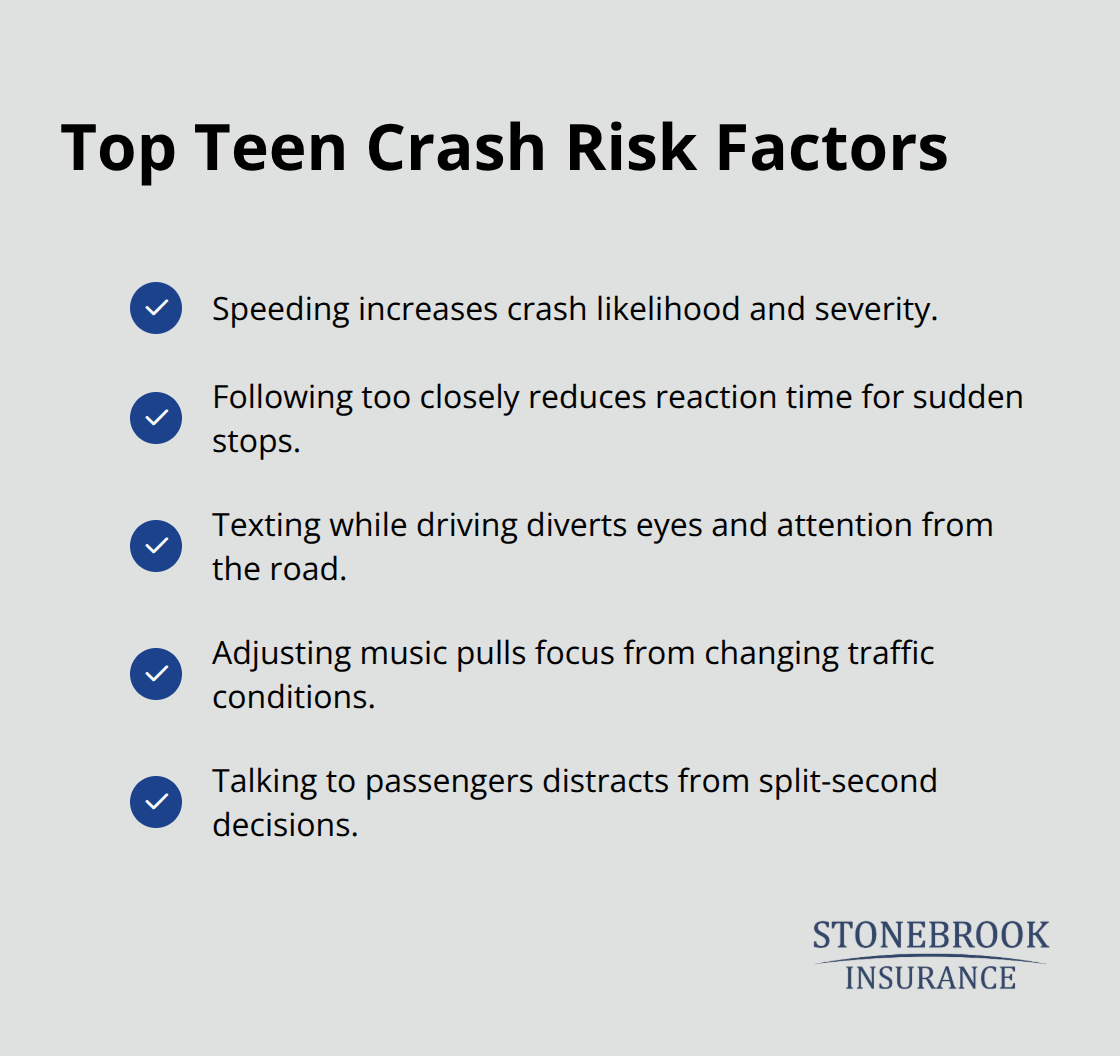
Texas law prohibits all drivers under 18 from using cell phones while driving, yet enforcement remains inconsistent and teen compliance stays low.
How Liability Coverage Protects Your Assets
The financial impact of teen crashes falls directly on your insurance liability coverage. A teen driver who causes a crash can expose your family to claims well beyond your policy limits, which is why minimum coverage alone leaves most Texas families dangerously exposed. Texas requires minimum liability coverage of 30/60/25-meaning $30,000 per person for bodily injury, $60,000 per accident for bodily injury, and $25,000 for property damage. These minimums sound adequate until a real accident occurs. A single hospitalization can exceed $30,000 within hours. Multiple injured passengers in the other vehicle multiply costs quickly.
Personal Liability Extends Beyond Policy Limits
If your teen causes a serious accident and your liability limits are exhausted, creditors can pursue your personal assets, savings, and future wages through a judgment. This concept, called negligent entrustment liability, means you as a parent can face personal legal responsibility if you allow an unfit or unlicensed driver to operate your vehicle. Failing to disclose your teen driver to your insurance company creates an even worse scenario-your insurer can deny the entire claim, leaving you personally liable for all damages (medical expenses, property damage, and lost wages). The stakes are high enough that many insurance professionals recommend liability limits of at least 100/300/100 for families with teen drivers, substantially above the legal minimum. Understanding these exposure levels shapes how you approach coverage decisions and asset protection strategies.
What Texas Law Requires for Teen Drivers
Texas mandates that every licensed driver carry minimum liability coverage of 30/60/25, which translates to $30,000 per person for bodily injury, $60,000 total per accident for bodily injury, and $25,000 for property damage. This legal floor applies equally to teen drivers and adults, yet it offers dangerously inadequate protection for families with young drivers.
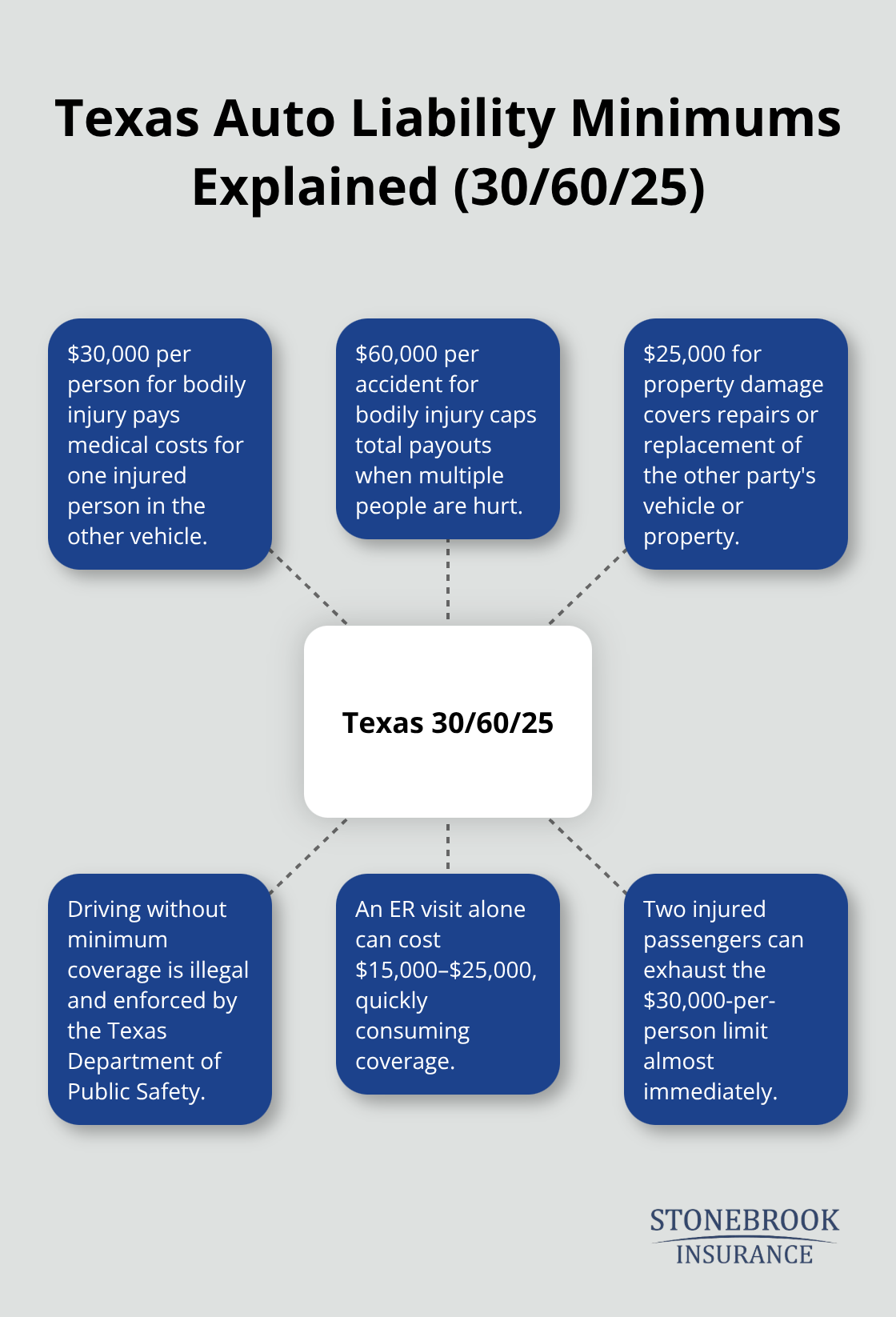
The Texas Department of Public Safety enforces these minimums, and driving without them is illegal. However, the real problem emerges when you understand what these numbers mean in practice. A single emergency room visit often costs $15,000 to $25,000 before surgery or extended care. If your teen injures two passengers, the $30,000-per-person limit evaporates almost instantly, and your family faces personal liability for the remainder.
Why Minimum Coverage Falls Short
Most Texas families with teen drivers should carry liability limits of at least 100/300/100-more than triple the legal minimum. This higher coverage costs surprisingly little more than minimum limits, typically adding only $10 to $20 monthly to your premium, yet it provides genuine asset protection when accidents happen. The gap between what the law requires and what actually protects your finances represents the most dangerous misconception in teen driver insurance. Your teen’s single mistake can trigger medical bills that dwarf the state minimum within hours, leaving you personally responsible for thousands of dollars in damages.
Understanding What Liability Coverage Actually Covers
Liability insurance covers injuries and property damage your teen causes to other people and their vehicles, but it explicitly does not cover your teen’s own injuries or your vehicle’s damage. That’s why collision and comprehensive coverage matter separately. Collision covers accidents and rollovers regardless of fault, while comprehensive handles theft, weather, vandalism, and animal strikes. Many Texas families mistakenly assume liability coverage alone is sufficient, then face shocking out-of-pocket costs when their teen’s vehicle sustains damage.
Choosing the Right Deductible and Vehicle
For vehicles worth less than $5,000, skipping comprehensive and collision coverage might make financial sense if you can absorb a total loss. For newer or financed vehicles, lenders require full coverage anyway. The practical strategy involves matching your deductible to your financial situation-a $500 deductible costs more monthly but reduces your out-of-pocket expense after a claim, while a $1,000 deductible lowers premiums substantially. When your teen first starts driving, choosing an older, reliable vehicle with strong safety ratings keeps insurance costs manageable while minimizing the damage to your finances if an accident occurs. Vehicles with modern safety features like automatic emergency braking and electronic stability control typically cost less to insure than sports cars or luxury models, making them smarter choices for teen drivers. The vehicle you select directly influences both your monthly premium and your financial exposure after a crash.
Proven Ways to Cut Teen Driver Insurance Costs
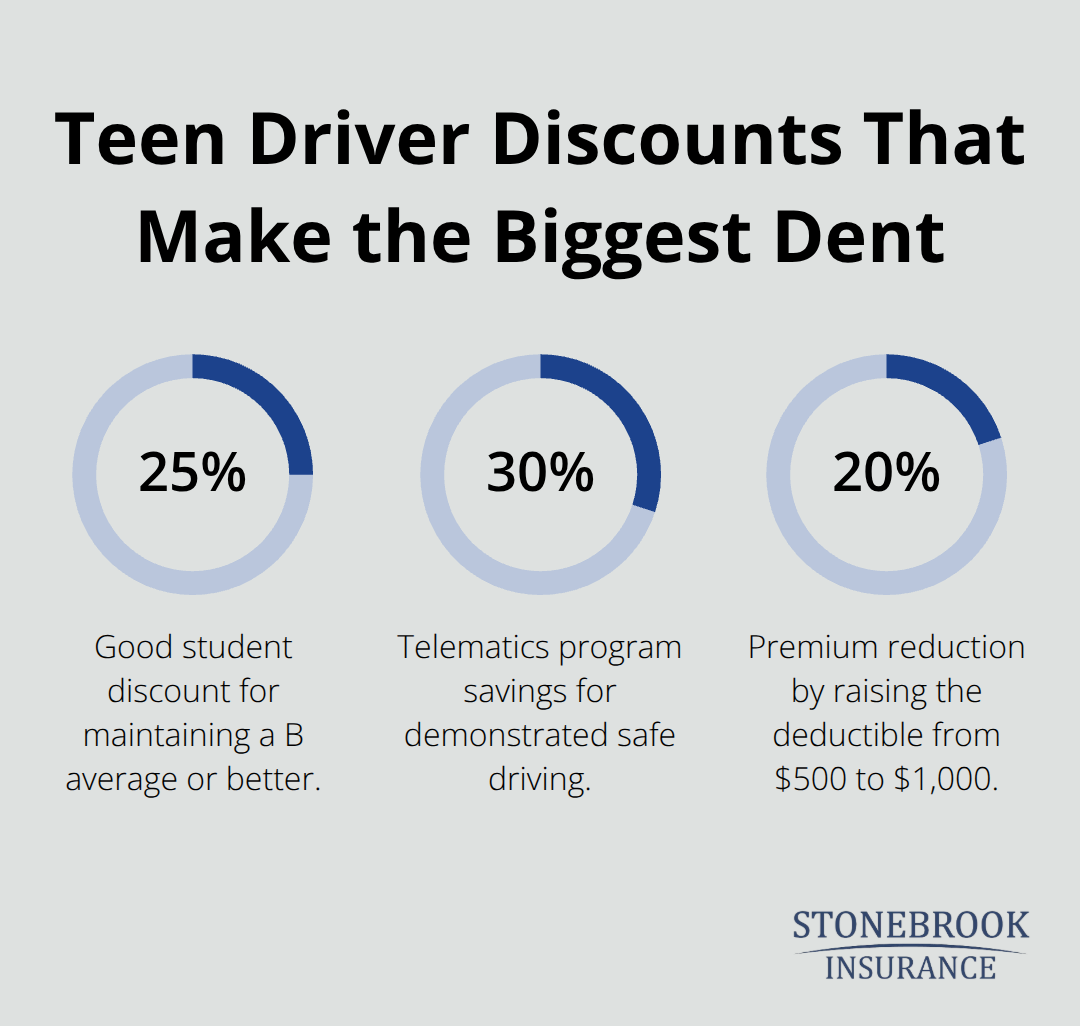
Accepting a 50 to 100 percent premium increase when adding a teen driver feels inevitable, but it’s not. The gap between families paying $4,000 extra annually and those paying $1,500 extra comes down to specific, actionable choices that directly reduce risk in your teen’s eyes. Good grades matter more than most parents realize-maintaining a B average or better qualifies your teen for good student discount that can save up to 25 percent. A teen with a 3.0 GPA or higher ranking in the top 20 percent of their class triggers immediate reductions that compound over years. Completing an approved driver education course adds additional savings, and home-schooled students can qualify through national standardized test results ranked in the top 20 percent. The combination of a good student discount plus a driver training discount can reduce your total premium increase from $4,000 annually to closer to $2,000, making the difference between manageable and unsustainable costs.
Vehicle Selection Directly Controls Your Premium
The car your teen drives matters far more than most parents understand when calculating insurance costs. A used sedan with modern safety features like automatic emergency braking and electronic stability control costs substantially less to insure than a sports car or luxury vehicle, yet provides superior protection. A reliable older vehicle with a strong safety rating keeps your monthly premium low while minimizing your financial exposure if an accident occurs. High-performance cars, sports models, and anything with high theft risk can double or triple your teen’s portion of the premium compared to practical, safety-focused options. If the vehicle is worth less than $5,000, removing comprehensive and collision coverage reduces costs further, though this strategy only works if you can absorb a complete loss. For financed or newer vehicles, lenders require full coverage anyway, but adjusting your deductible from $500 to $1,000 can lower premiums by 15 to 20 percent while keeping reasonable protection in place.
Safe Driving Programs Reward Responsible Behavior
Telematics programs like State Farm’s Steer Clear and Drive Safe & Save monitor actual driving habits through smartphone apps or devices, then provide discounts when your teen demonstrates safe behavior over weeks and months. These programs work because they create real accountability-your teen sees their own acceleration, braking, and speed patterns, which naturally encourages safer habits. Discounts from safe driver monitoring programs can reach 10 to 30 percent depending on your teen’s performance and your insurer’s specific program. This approach costs nothing to enroll in and often provides savings that exceed the value of any other single discount available. Shopping multiple major carriers helps you find the programs and discounts that fit your specific situation, which means accessing options many families never discover on their own.
Final Thoughts
Teen driver liability insurance stands between your family’s financial security and potential devastation. Texas’s minimum liability limits of 30/60/25 leave most families dangerously exposed, and a single accident can generate medical bills exceeding $100,000. If your liability coverage runs out, creditors can pursue your personal assets, savings, and future wages through judgment.
Protecting your family requires three concrete actions. First, increase your liability limits to at least 100/300/100, which typically costs only $10 to $20 more monthly than minimum coverage but provides genuine asset protection. Second, implement the cost-reduction strategies that actually work: encourage good grades for the good student discount, enroll your teen in an approved driver education course, select a practical vehicle with strong safety ratings, and consider a telematics program that rewards safe driving habits (these steps can cut your premium increase from $4,000 annually down to $1,500 or less). Third, review your coverage annually as your teen’s driving arrangements change, whether through relocation to college or shifts in vehicle use.
Contact Stonebrook Insurance today for a personalized quote that reflects your actual risk and protects what matters most. Our team helps Texas families navigate teen driver liability insurance decisions with personalized solutions tailored to your specific needs and budget. We find coverage that matches your family’s situation and provides the local expertise that makes a real difference.
The information provided in this blog is for general informational purposes only and does not constitute legal, financial, or insurance advice. Coverage options, terms, and availability may vary. Please consult with a licensed professional for advice specific to your situation.
Artificial intelligence may have been used to generate text and images in some blog articles.