
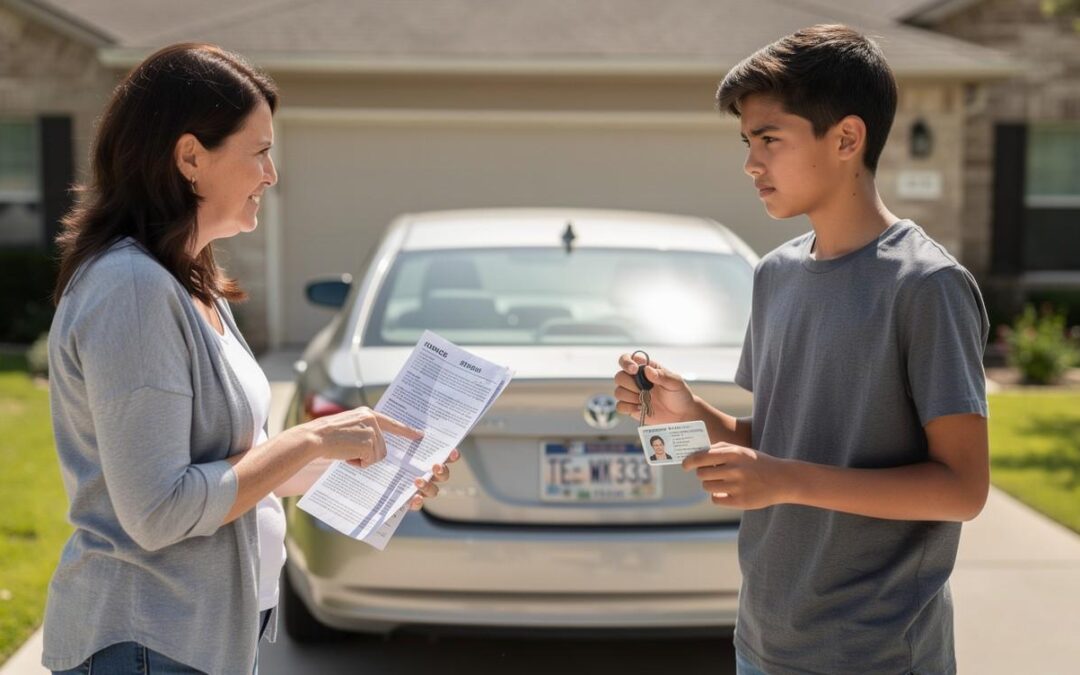
Adding a teen driver to your family’s insurance policy can feel overwhelming. Young driver insurance in Texas comes with higher premiums, confusing coverage options, and plenty of decisions to make.
We at Stonebrook Insurance help Texas parents navigate these choices with practical strategies that actually lower costs. This guide walks you through rate factors, discount opportunities, and coverage options designed for your family’s needs.
Why Teen Drivers Cost So Much to Insure
The Statistical Reality of Teen Driver Risk
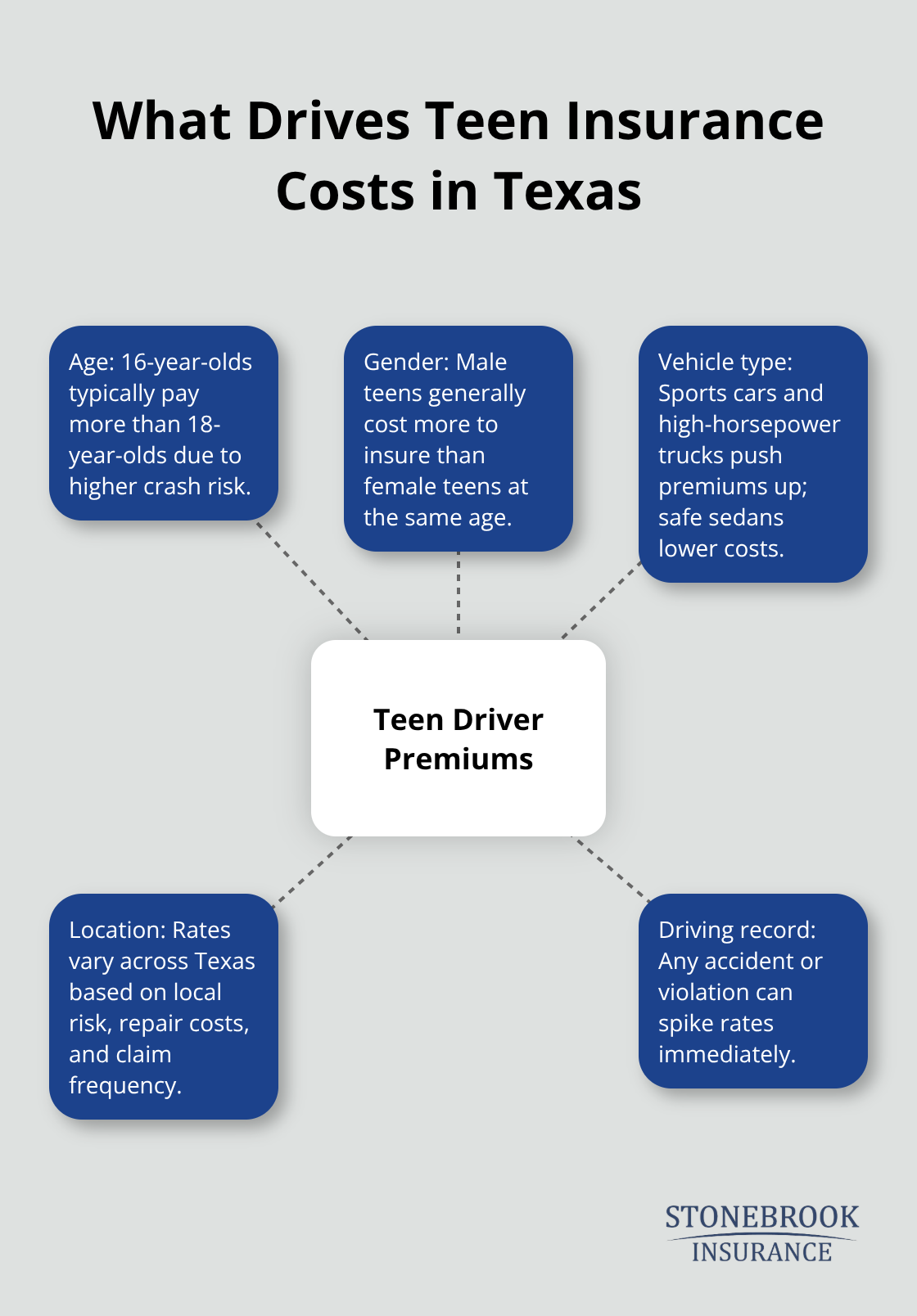
Teen drivers represent a statistical reality that insurance companies cannot ignore. Drivers aged 16 to 19 are three times more likely to crash than drivers aged 20 and older, according to the CDC. This isn’t opinion-it’s data that directly determines your premium. Insurance companies price policies based on risk, and teen drivers are objectively riskier. A 16-year-old added to your policy will typically increase your annual premium by 50 to 100 percent, depending on the vehicle and coverage limits you select. Some families see increases exceeding $2,000 per year.
How Age, Gender, and Vehicle Type Affect Your Costs
The actual cost varies significantly based on your teen’s age, driving record, the type of vehicle, and your location within Texas. A 16-year-old pays more than an 18-year-old, and a male teen typically costs more than a female teen at the same age. If your teen drives a sports car or a truck with high horsepower, expect premiums at the upper end of that range. If they drive a sedan with strong safety ratings, costs drop noticeably.
Texas Minimum Coverage and Your Liability Exposure
Texas requires minimum liability coverage of 30/60/25, meaning $30,000 for bodily injury per person, $60,000 per accident, and $25,000 for property damage. However, this minimum coverage leaves your family dangerously exposed. If your teen causes an accident resulting in $100,000 in medical bills, the state minimum covers only $30,000 per person. You would be personally liable for the remaining $70,000. This reality means most Texas families need higher limits than the legal minimum, which pushes premiums even higher.
Factors That Work in Your Favor
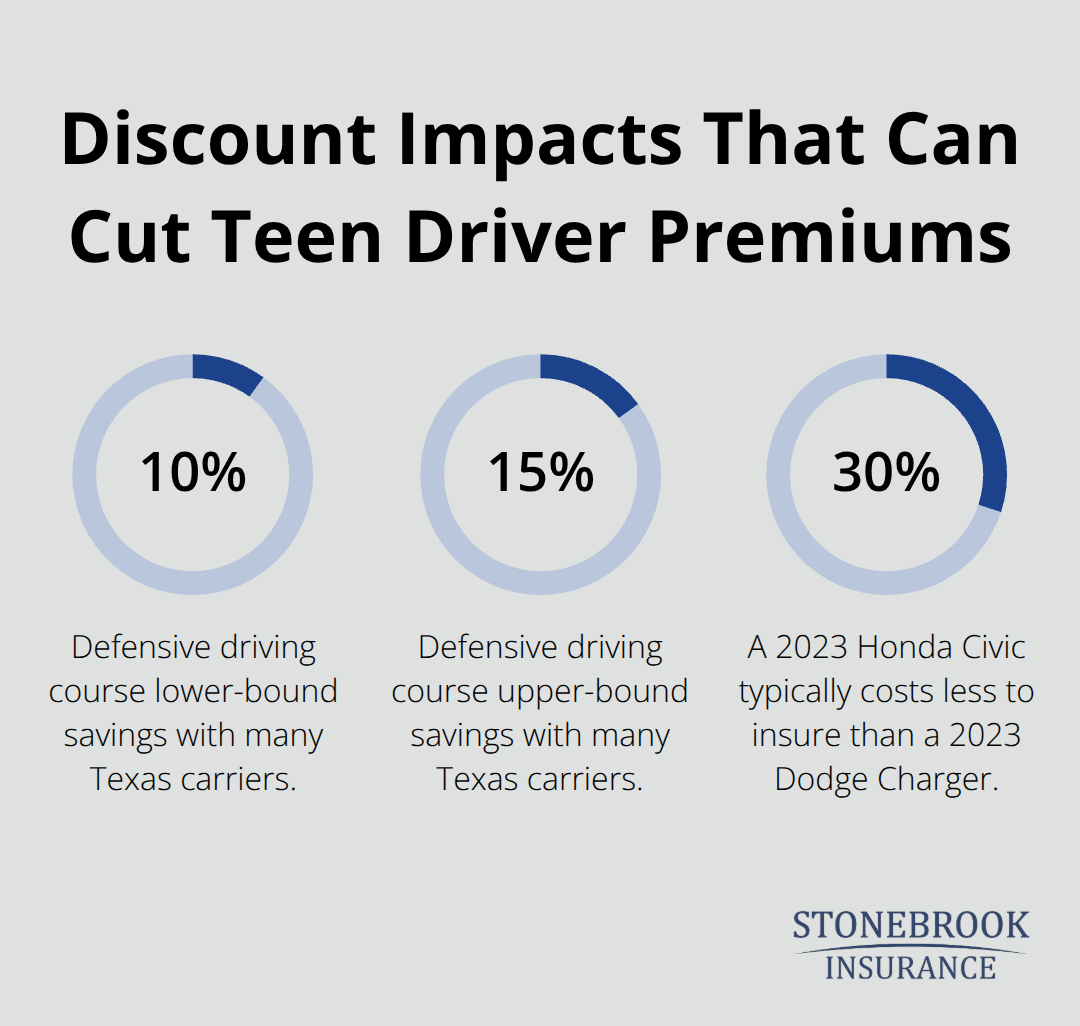
A clean driving record matters enormously-your teen’s first accident or traffic violation will spike rates immediately. A defensive driving course completed before your teen starts driving can reduce premiums by 10 to 15 percent with most carriers. The vehicle choice also makes a tangible difference. A 2023 Honda Civic typically costs 30 percent less to insure than a 2023 Dodge Charger.
If you’re considering what car your teen will drive, prioritize safety ratings and lower repair costs over performance features. These decisions directly impact what you’ll pay each month, which is why understanding your options matters before you add your teen to your policy.
How to Lower Young Driver Insurance Premiums
Good Student Discounts and Academic Performance
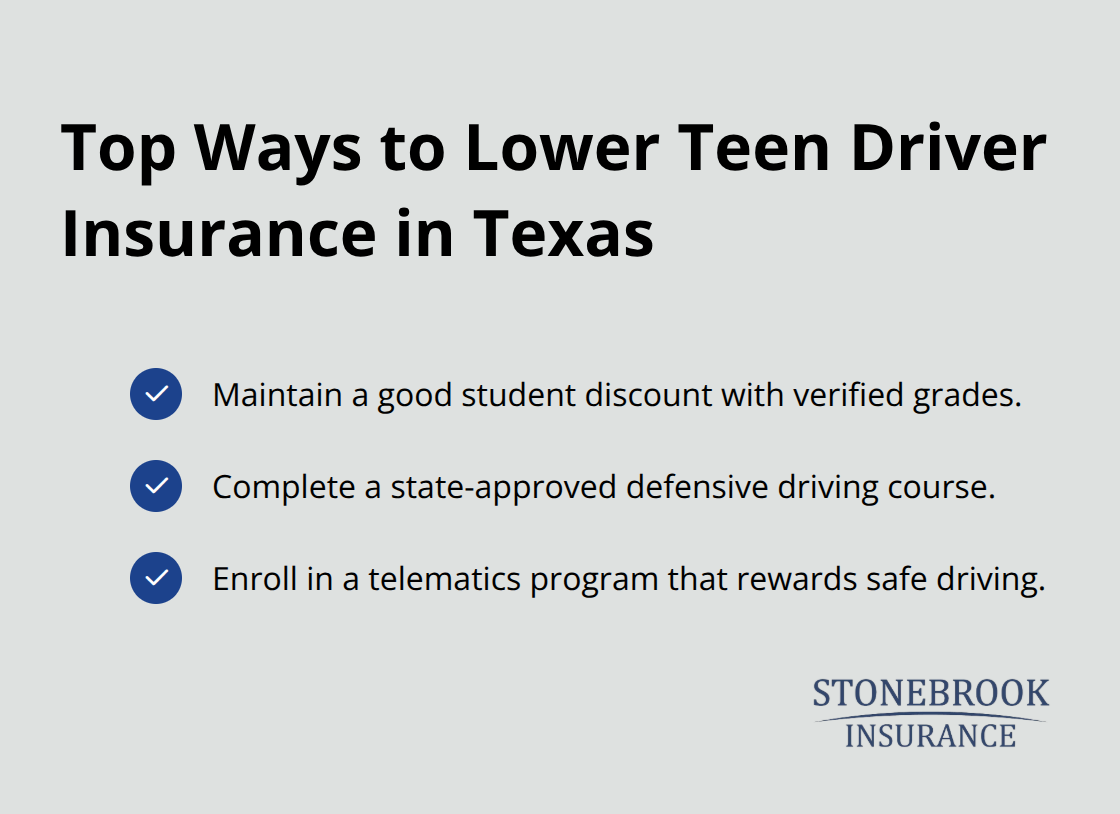
Good grades directly reduce what you pay for insurance. Most Texas insurers offer a good student discount if your teen maintains good grades, according to data from the National Association of Insurance Commissioners. Your teen needs to provide a report card or transcript showing their GPA at least once per year to qualify. Some insurers require enrollment in their good student programs, while others simply ask for proof during policy renewal. If your teen’s grades slip below the threshold, you lose the discount immediately, so this creates built-in incentive for academic performance. The discount disappears once your teen turns 25, so these savings typically last 7 to 9 years from when they first get their license.
Defensive Driving Courses and Safety Certifications
Defensive driving courses deliver measurable savings that stack on top of other discounts. A certified course completion typically reduces your premium by 10 to 15 percent for three years, and your teen can often complete the training online in just four to six hours. Texas recognizes courses approved by the Department of Licensing and Regulation, and completing one before your teen drives-rather than after an accident-signals responsibility to insurers. This proactive approach costs less than waiting for an incident to occur.
Usage-Based Insurance Programs and Telematics Devices
Usage-based insurance programs with telematics devices offer the most dramatic savings potential, though they require your teen’s driving to actually be safe. Programs like Snapshot from Progressive or Milewise from Allstate monitor real-time driving behavior and can reduce premiums by 10 to 30 percent based on actual performance. These devices track harsh braking, speeding, and time of day driven, giving insurers concrete data instead of relying on age-based assumptions. Teens who drive less frequently benefit most; if your teen only drives to school and part-time work, a usage-based program could cut costs by hundreds annually compared to traditional policies. The tradeoff is transparency-your teen knows their driving is monitored, which often improves their behavior behind the wheel.
Understanding these discount opportunities positions your family to make informed coverage decisions. The next section covers the specific coverage types Texas requires and which options protect your family most effectively.
What Parents Should Know About Coverage Options
Liability Coverage Requirements in Texas
Texas liability minimums of 30/60/25 are inadequate for families with teen drivers, and sticking to these limits exposes your household to devastating financial risk. If your 17-year-old causes a serious accident injuring multiple people, $30,000 per person liability coverage evaporates instantly against medical bills that routinely exceed $100,000 per injured party. Your personal assets become vulnerable to lawsuits for the unpaid difference.
Most Texas families should raise liability limits to at least 100/300/100, which costs roughly $15 to $30 more monthly but protects your home and savings from judgment claims. Families with significant assets should consider 250/500/250 limits. The difference between Texas minimum coverage and adequate protection amounts to approximately $180 to $360 annually-a small price against potential liability exposure exceeding $500,000 from a single serious crash.
Comprehensive and Collision Coverage for Newer Vehicles
Comprehensive and collision coverage decisions depend entirely on your vehicle’s age and loan status. If your teen drives a financed or leased vehicle, your lender requires collision coverage, which pays for damage your teen causes in an accident regardless of fault. If you own the car outright and it’s worth less than $5,000, dropping collision makes financial sense since the deductible alone might approach the vehicle’s value.
Financed vehicles worth $10,000 or more warrant collision coverage with a $500 deductible rather than $1,000, since teen drivers statistically experience more accidents. Comprehensive coverage protects against theft, weather, and vandalism and costs roughly $15 to $25 monthly for older vehicles, making it reasonable to maintain even on paid-off cars.
Uninsured and Underinsured Motorist Protection
Uninsured and underinsured motorist protection deserves serious attention because approximately 12.6% of Texas drivers carry no insurance according to the Texas Department of Insurance. If an uninsured driver hits your teen, this coverage pays medical bills and vehicle damage up to your limits. Texas allows you to set these limits independently of your liability limits, and raising them to match or exceed your liability coverage costs minimal additional premium while protecting your family against drivers who ignore the law.
Final Thoughts
The coverage decisions you make now determine whether your family faces financial devastation after an accident or walks away protected. Raising liability limits beyond Texas minimums, maintaining collision coverage on financed vehicles, and securing uninsured motorist protection addresses real risks that teen drivers face on Texas roads. These aren’t optional upgrades; they’re essential safeguards against the statistical reality that teen drivers crash at three times the rate of experienced drivers.
We at Stonebrook Insurance help Texas families navigate young driver insurance Texas with personalized solutions tailored to your specific situation. Our team has spent more than 30 years working with families like yours, and we shop multiple major carriers to find coverage that actually fits your needs and budget. Whether your teen drives a sedan to school or you’re managing coverage for multiple young drivers, we handle the complexity so you don’t have to.
Visit Stonebrook Insurance to discuss your young driver’s coverage needs with our team. We have three locations across Texas in Comanche, McKinney, and Round Rock, and we’re ready to build a policy that protects your family without unnecessary expense.
The information provided in this blog is for general informational purposes only and does not constitute legal, financial, or insurance advice. Coverage options, terms, and availability may vary. Please consult with a licensed professional for advice specific to your situation.
Artificial intelligence may have been used to generate text and images in some blog articles.