

Adding a teen driver to your family’s auto policy brings real financial pressure. Texas teen driver insurance costs significantly more than coverage for adult drivers, with teens involved in fatal crashes at three times the rate of drivers aged 20 and older.
We at Stonebrook Insurance help families navigate these higher costs by identifying discounts and strategies that actually work. This guide walks you through state requirements, available savings, and practical ways to lower your premiums without sacrificing protection.
What Texas Law Requires for Teen Driver Coverage
Minimum Liability Coverage in Texas
Texas mandates minimum liability coverage of 30/60/25 for all drivers, including teens with learner’s permits, provisional licenses, or full licenses. This breaks down to $30,000 per person for bodily injury, $60,000 per accident for bodily injury, and $25,000 for property damage. Many families mistakenly believe this minimum protects them adequately, but a single serious crash can easily exceed these limits. One accident involving hospital stays or vehicle damage to multiple cars leaves your family personally liable for tens of thousands of dollars beyond what your policy covers. You should review whether your state minimum aligns with your actual financial exposure, especially if you own a home or have savings worth protecting.
Additional Coverage Types Worth Considering
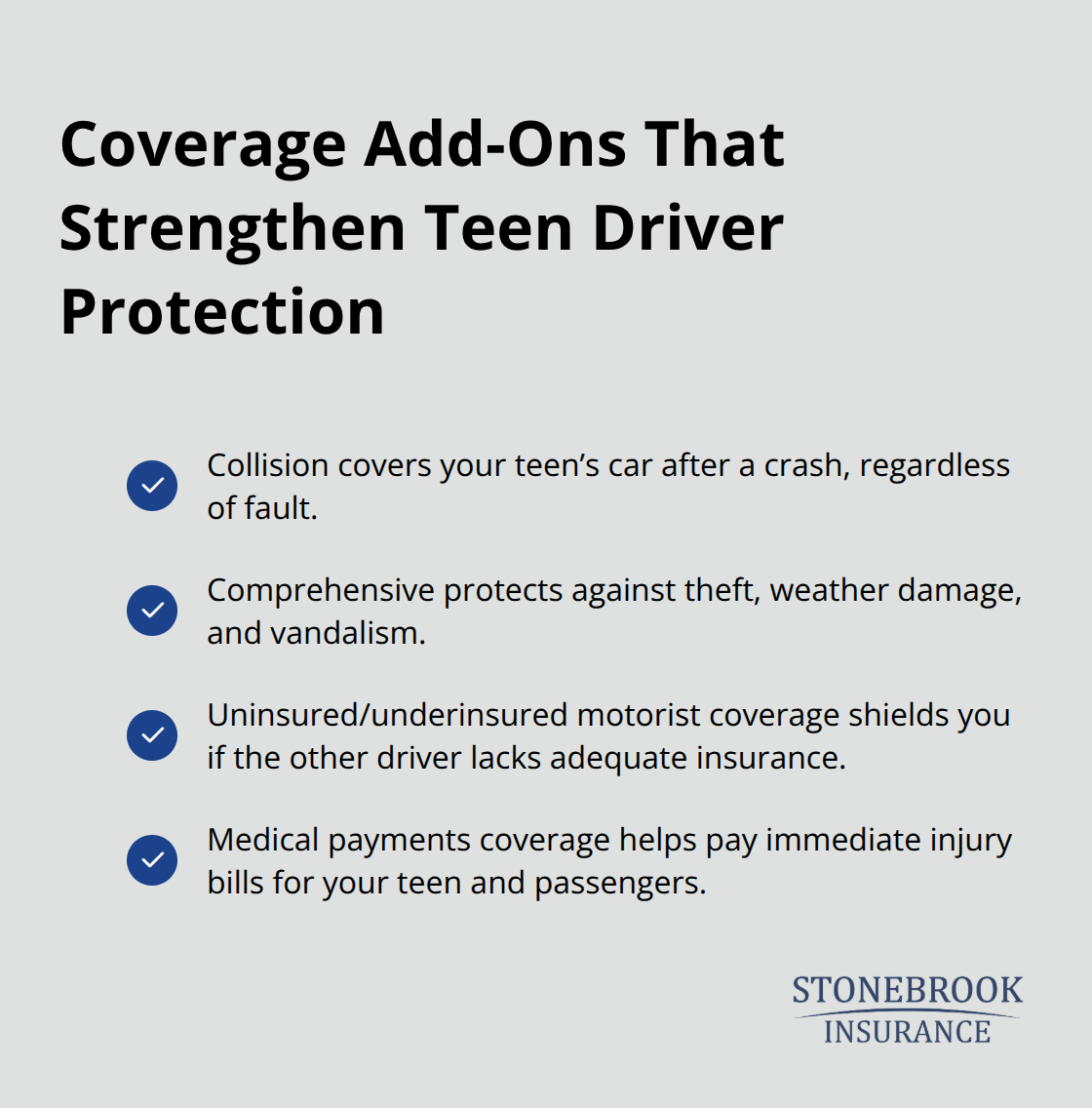
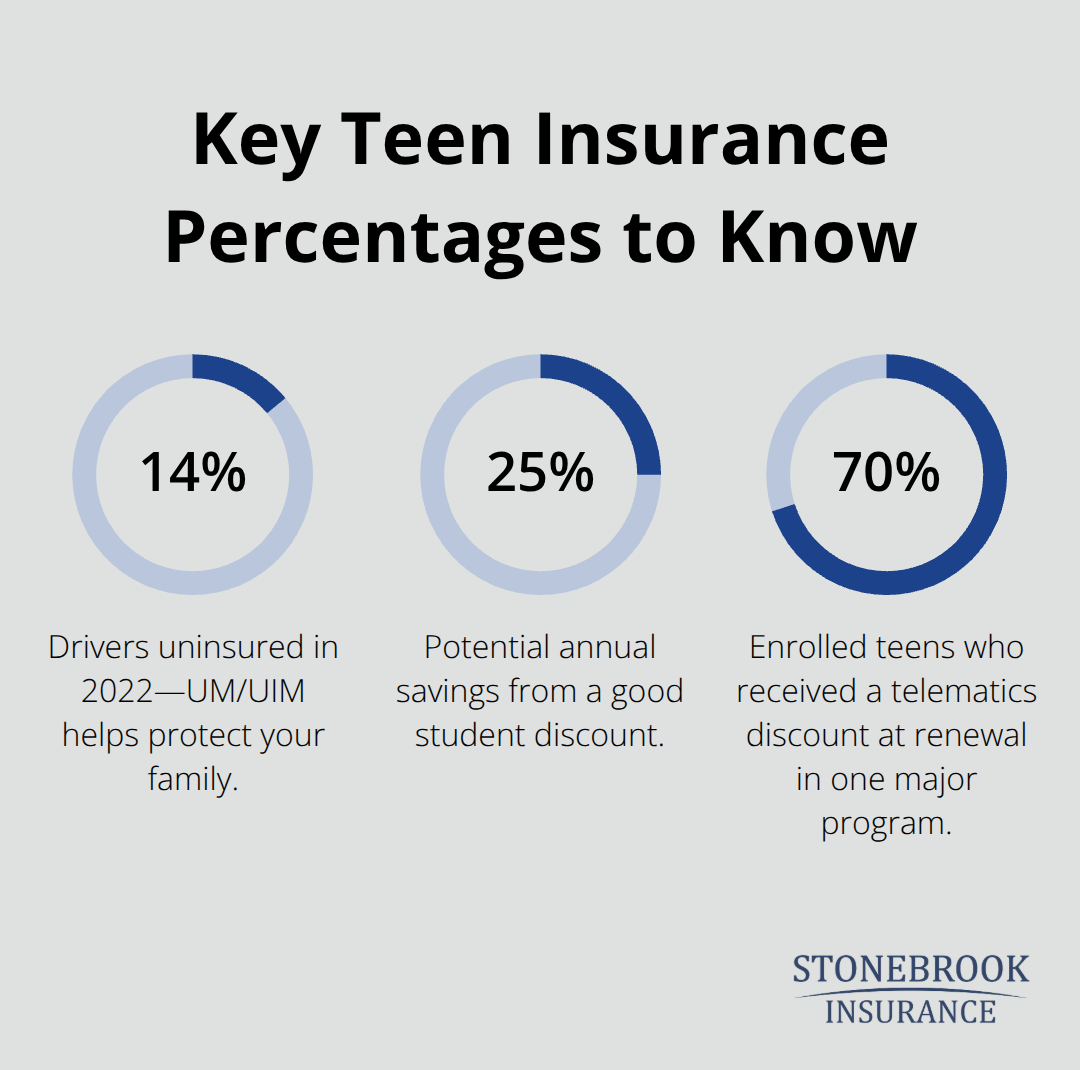
Beyond state minimums, you should consider collision and comprehensive coverage, uninsured or underinsured motorist protection, and medical payments coverage. Collision covers damage to your teen’s vehicle from crashes regardless of fault, while comprehensive handles theft, weather, and vandalism. In 2022, 14.0 percent of motorists were uninsured, meaning uninsured or underinsured motorist coverage protects your family if another driver lacks adequate insurance. Medical payments coverage pays for injuries to your teen and passengers without waiting for fault determination, which matters when hospital bills arrive immediately after an accident. If your teen’s car is financed or leased, your lender will require collision and comprehensive as a condition of the loan.
For older vehicles worth less than $5,000, dropping these coverages may make financial sense, but this decision depends entirely on whether you can afford to replace the vehicle out of pocket if it’s damaged or totaled.
How Age Impacts Your Teen’s Insurance Cost
Age dramatically affects what you’ll pay. A 16-year-old driver typically costs $4,000 to $6,000 annually to insure on a family policy, while an 18-year-old with the same driving record costs roughly $1,500 to $2,500 less. This gap reflects insurance company data showing that crash rates drop sharply between ages 16 and 18 as driving experience accumulates.
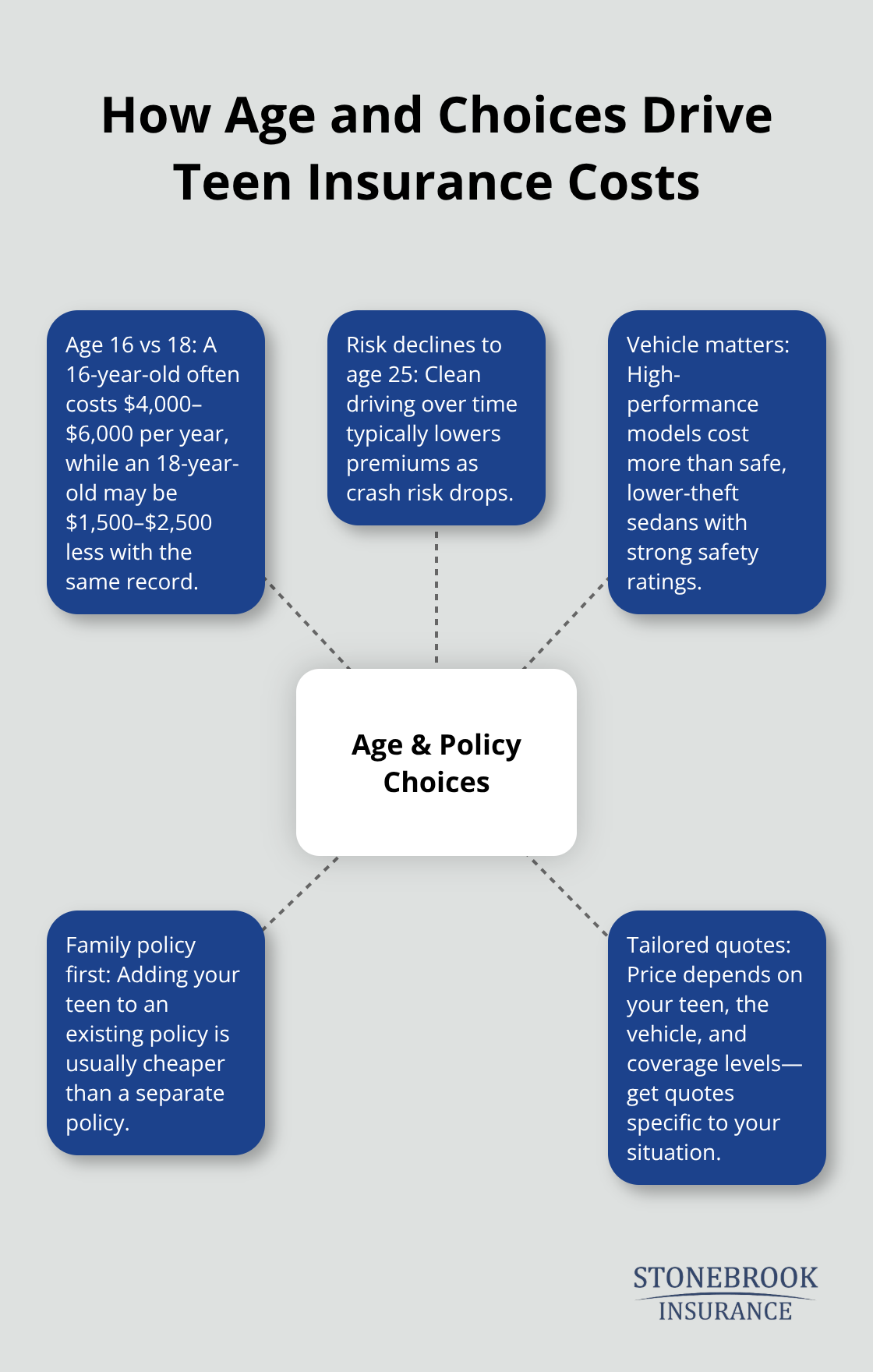
Premiums continue declining through age 25 if your teen maintains a clean driving record, since statistical crash risk for that age group decreases year over year. The vehicle your teen drives also matters enormously. A high-performance sedan costs significantly more to insure than a conventional four-door sedan with strong safety ratings and low theft history. Adding a teen to an existing family policy costs less than purchasing a separate policy for them, though your overall family premium will still increase. Getting a quote specific to your situation, your teen’s age, the vehicle they’ll drive, and your desired coverage levels gives you the actual numbers rather than estimates-and that’s where identifying available discounts becomes your next priority.
Common Discounts Available for Teen Drivers
The Good Student Discount: Your Most Reliable Savings Path
The good student discount remains your most reliable path to lower premiums, and it delivers meaningful numbers. Students under 25 who maintain at least a B average or 3.0 GPA qualify for savings that can reach 25 percent annually, with some insurers extending that discount until age 25 even after your teen graduates. To qualify, you need documentation-recent report cards, Dean’s List certificates, or Honor Roll letters work perfectly. Home-schooled teens can also qualify by presenting evidence of high performance on national standardized tests ranking in the upper 20 percent. This discount matters because a teen paying $5,000 annually could save $1,250 with a single B average, which compounds over years of driving. Your teen must keep their grades up to retain the discount at renewal, so this isn’t a one-time win but rather an ongoing incentive structure that rewards consistent academic performance.
Driver Training and Telematics Programs
Driver’s education and safety training programs create another legitimate savings opportunity, though availability varies by state. Texas insurers offer driver training discounts when all operators under 21 complete an approved driver education course, which typically costs $300 to $500 upfront but pays for itself within months through premium reductions. Telematics programs monitor actual driving behavior through smartphone apps, providing initial discounts up to 15 percent with potential to exceed that threshold after the monitoring period ends if your teen demonstrates safe habits. Over 460,000 teen drivers enrolled in one major telematics program, and more than 70 percent received discounts at renewal, indicating these programs actually work rather than function as marketing gimmicks.
Multi-Policy Bundling and Family Plan Advantages
Multi-policy bundling generates significant savings that most families overlook: combining auto with homeowners coverage typically saves over $950 annually, and bundling additional policies like life or umbrella coverage increases savings further. Adding your teen to an existing family policy rather than purchasing separate coverage costs substantially less, though your overall family premium rises because insurance companies rate teens as higher-risk drivers. The financial reality is straightforward: a 16-year-old added to a parent’s policy costs less than that same teen purchasing independent coverage, making the family policy route your baseline starting point before exploring additional discounts.
Layering Discounts for Maximum Savings
The combination of a good student discount, driver’s education credit, and multi-policy bundling compounds into savings that make teen coverage financially manageable rather than budget-crushing. Your next step involves understanding what impacts teen driver insurance rates and how to adjust coverage limits based on your vehicle’s actual value, since keeping unnecessary protection on older cars wastes money that could go toward meaningful savings elsewhere.
How to Reduce Your Teen’s Insurance Cost
Compare Quotes Across Multiple Carriers
Comparing quotes across multiple carriers reveals the hard truth about teen insurance pricing: the same coverage costs significantly more with one company versus another, making quote comparison non-negotiable rather than optional. Contact at least three major insurers and provide identical information for each quote-your teen’s age, driving record, the vehicle they’ll drive, desired coverage limits, and all applicable discounts. Most insurers offer online quote tools that take fifteen minutes, though calling local agents often uncovers discounts the website doesn’t mention automatically. When comparing quotes, look beyond the premium number and examine what coverage each quote includes at that price point-a cheaper quote with $30,000 liability limits differs fundamentally from one offering $100,000 limits at a higher cost. Request quotes with identical deductibles ($500, $1,000) so the numbers truly compare apples to apples rather than reflecting different cost-sharing structures.
Use Telematics Programs to Reward Safe Driving
Telematics programs transform teen insurance from a budget disaster into something manageable by rewarding actual safe driving rather than relying on age demographics alone. These programs require your teen to drive with a monitoring app active, which tracks acceleration patterns, braking intensity, time of day driving occurs, and phone use while driving. Initial discounts typically reach 15 percent, but teens who demonstrate consistently safe habits often exceed that threshold at renewal. The real value emerges when you layer this discount with the good student discount and driver’s education credit, which compounds into 40 to 50 percent total savings that completely change your financial picture.
Adjust Coverage Based on Vehicle Value
Adjusting coverage based on vehicle value eliminates waste you fund unnecessarily. If your teen drives a used vehicle worth $7,000, carrying $1,000 collision and comprehensive deductibles costs far less than $500 deductibles while still protecting against catastrophic loss, since you can afford the $1,000 out-of-pocket amount. For vehicles worth under $5,000, dropping collision and comprehensive entirely makes financial sense if you can replace the vehicle without destroying your emergency fund-the monthly premium savings often exceed what you’d recover from an insurance claim on a low-value car. Your lender dictates this decision if the vehicle is financed or leased, since they require full coverage, but if you own the car outright, this flexibility exists. Calculate your break-even point: divide the vehicle’s value by the annual premium difference between full coverage and liability-only, and if that number falls below three years, dropping those coverages likely makes sense financially.
Final Thoughts
Texas teen driver insurance requires you to balance legal minimums with realistic financial protection, and the strategies outlined above transform what feels like an impossible expense into something manageable. Texas mandates 30/60/25 liability coverage for all teen drivers, but this minimum leaves your family exposed to significant personal liability in serious accidents. Adding collision, comprehensive, and uninsured motorist coverage protects your assets, while good student discounts, driver training credits, and telematics programs compound into savings that offset the higher premiums teens naturally carry.
Your next step involves gathering quotes from multiple carriers using identical information about your teen’s age, the vehicle they’ll drive, and your desired coverage limits. Request quotes that layer available discounts together rather than viewing them separately, since combining a good student discount with driver’s education credit and multi-policy bundling creates real financial relief. Adjust your deductibles and coverage limits based on your vehicle’s actual value, and seriously evaluate whether collision and comprehensive make sense on older cars worth less than $5,000.
We at Stonebrook Insurance understand that Texas teen driver insurance decisions affect your family’s financial security and your teen’s ability to drive safely. Our team shops multiple major carriers to find competitively priced coverage tailored to your specific situation, whether you need basic liability protection or comprehensive coverage for a financed vehicle. Contact Stonebrook Insurance to discuss your teen’s coverage needs and identify the discounts and strategies that work best for your family’s budget.
The information provided in this blog is for general informational purposes only and does not constitute legal, financial, or insurance advice. Coverage options, terms, and availability may vary. Please consult with a licensed professional for advice specific to your situation.
Artificial intelligence may have been used to generate text and images in some blog articles.